
Last updated September 20, 2026
Level 1 sweep and inspection to the NFPA 211 annual standard - flue, crown, cap, and flashing checked and photographed
Chimney sweep logs do not sweep chimneys. They loosen some creosote - which then falls where a brush and vacuum still have to collect it.
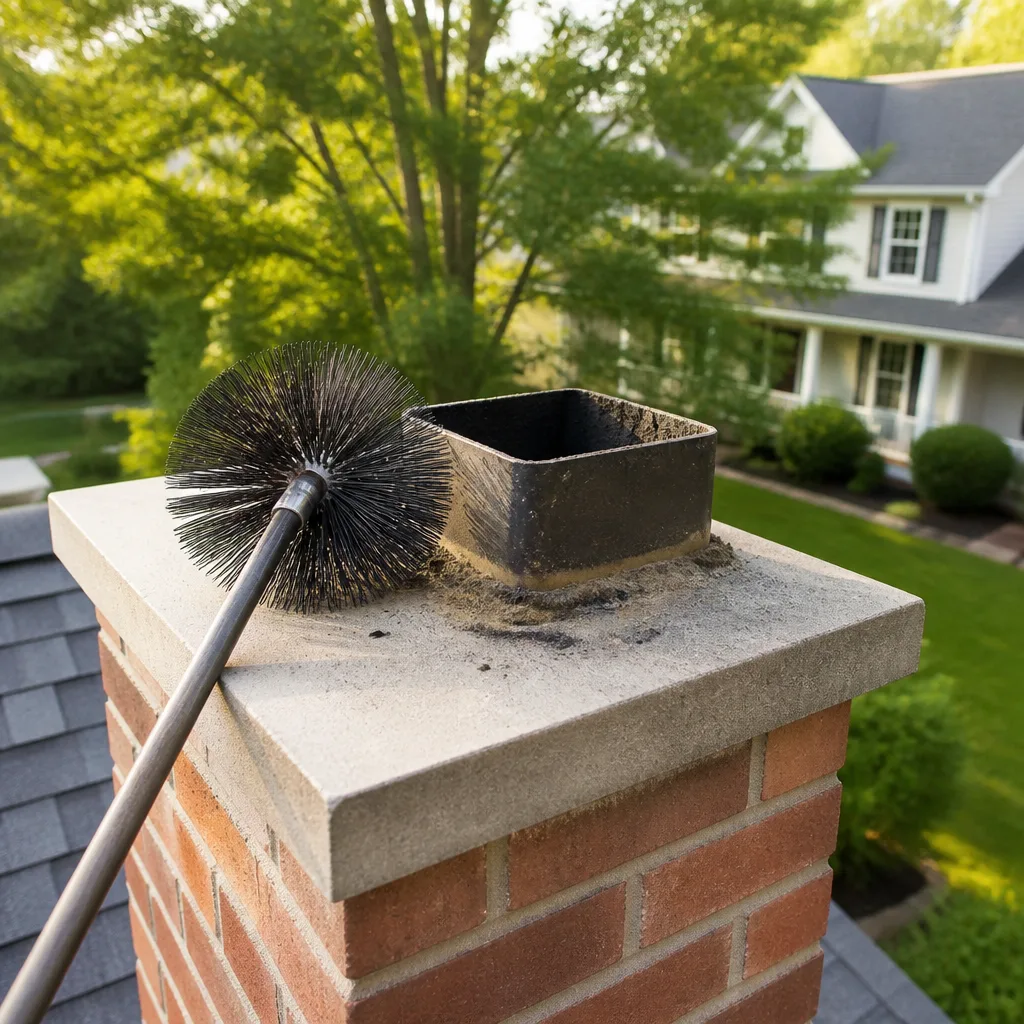
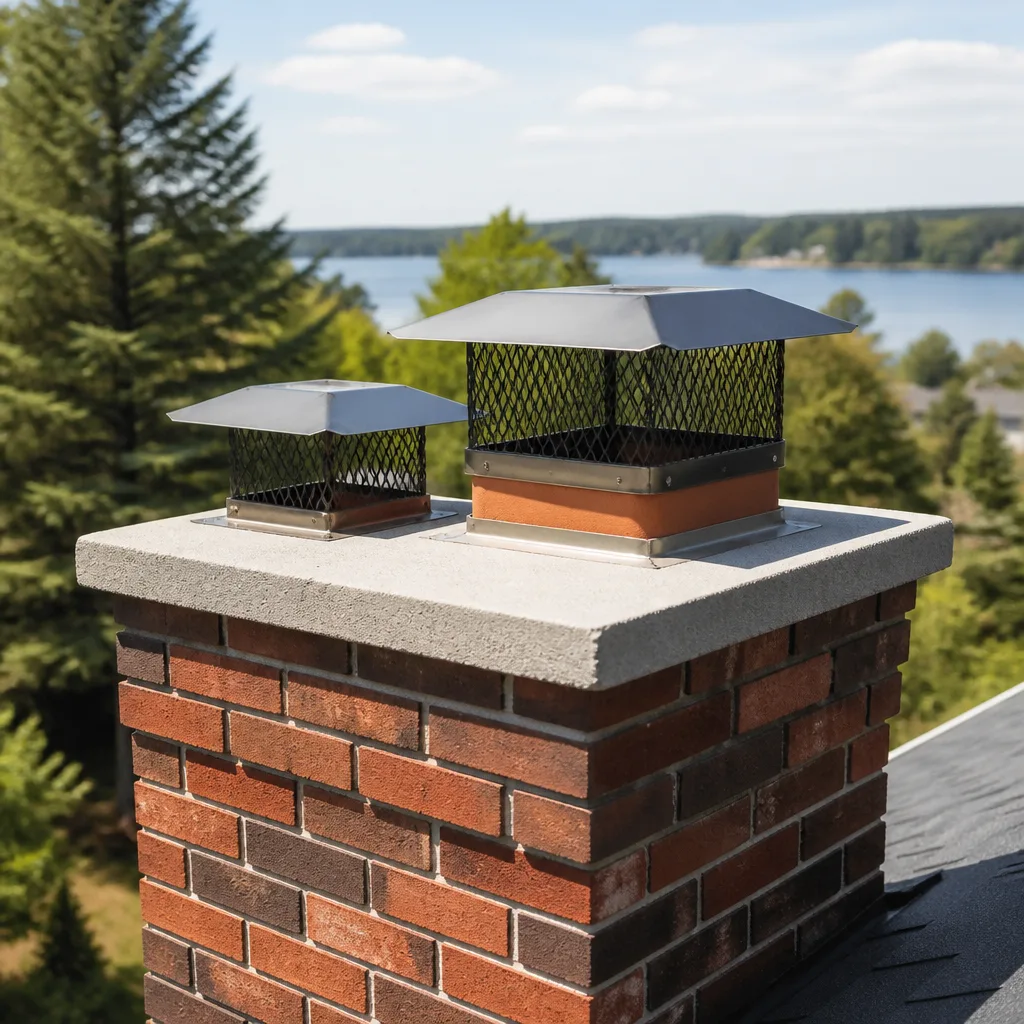
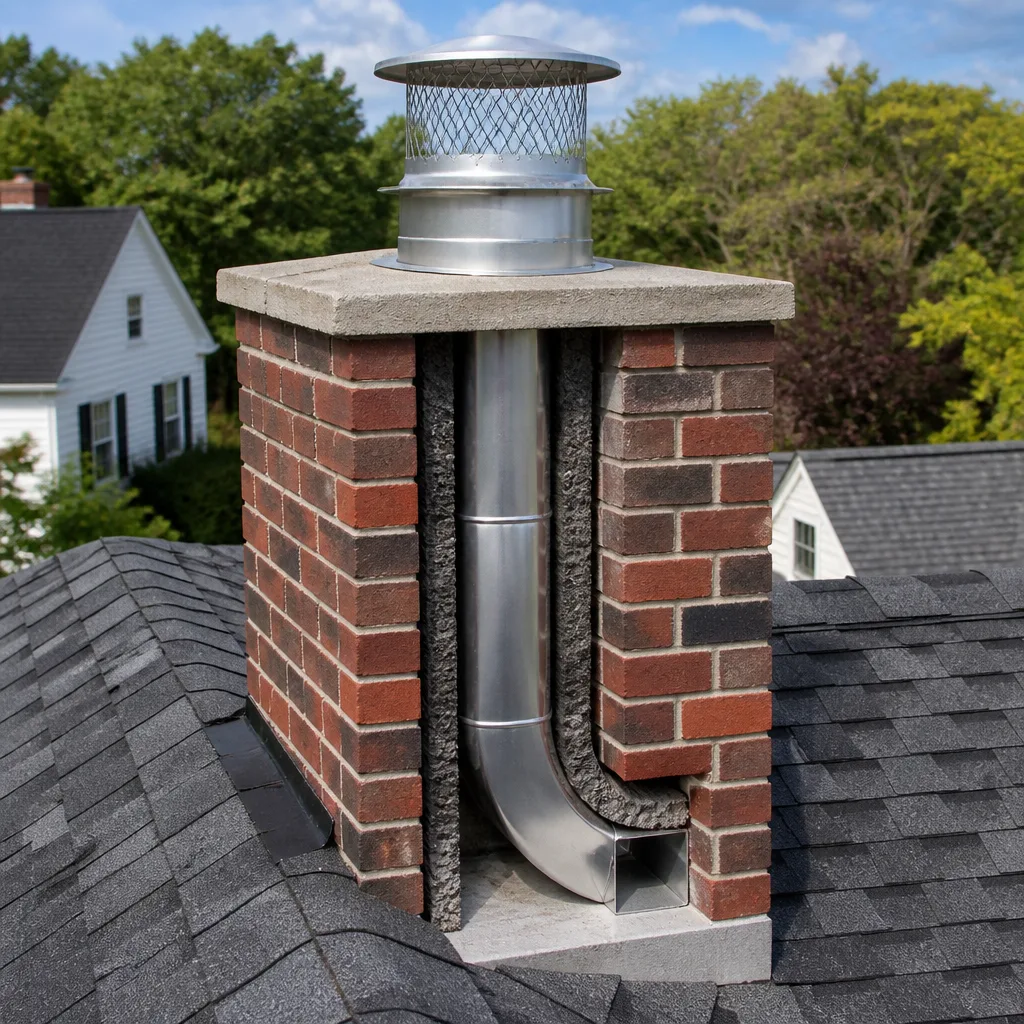
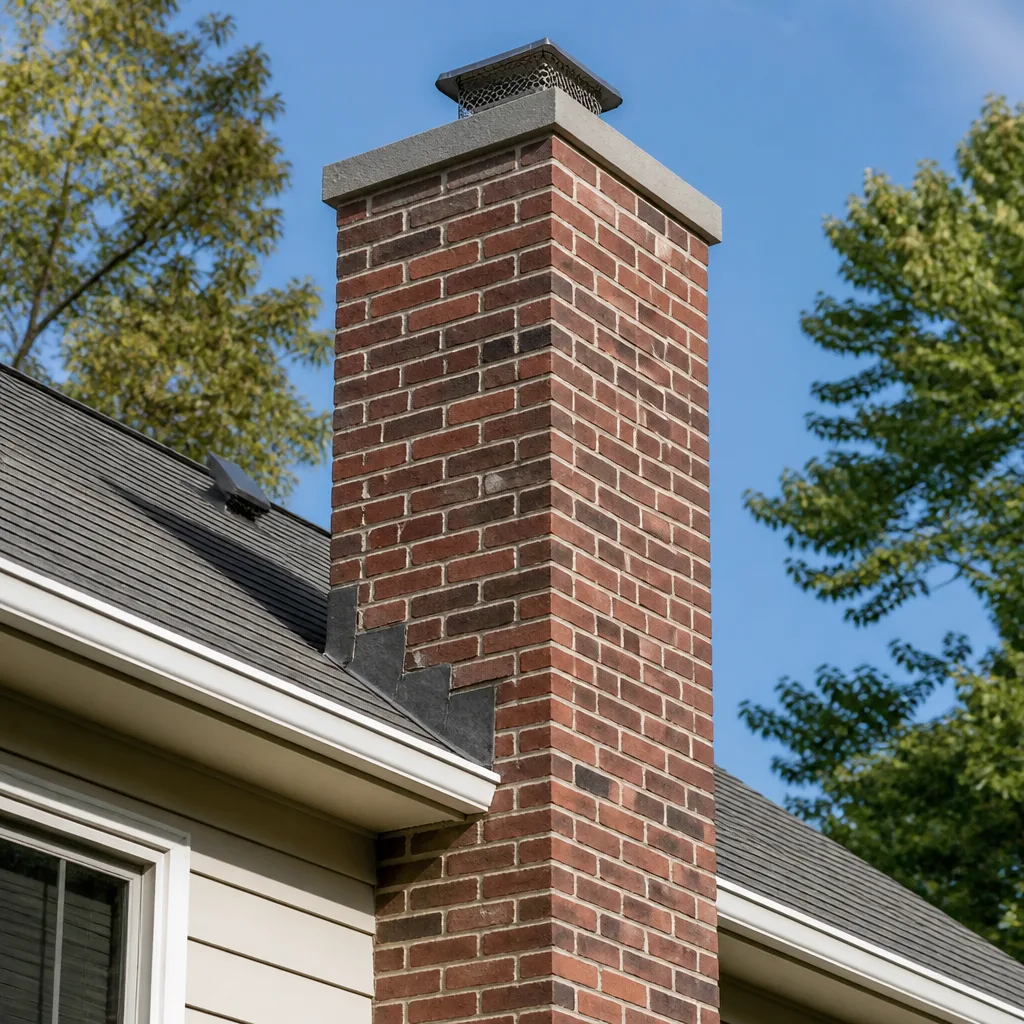
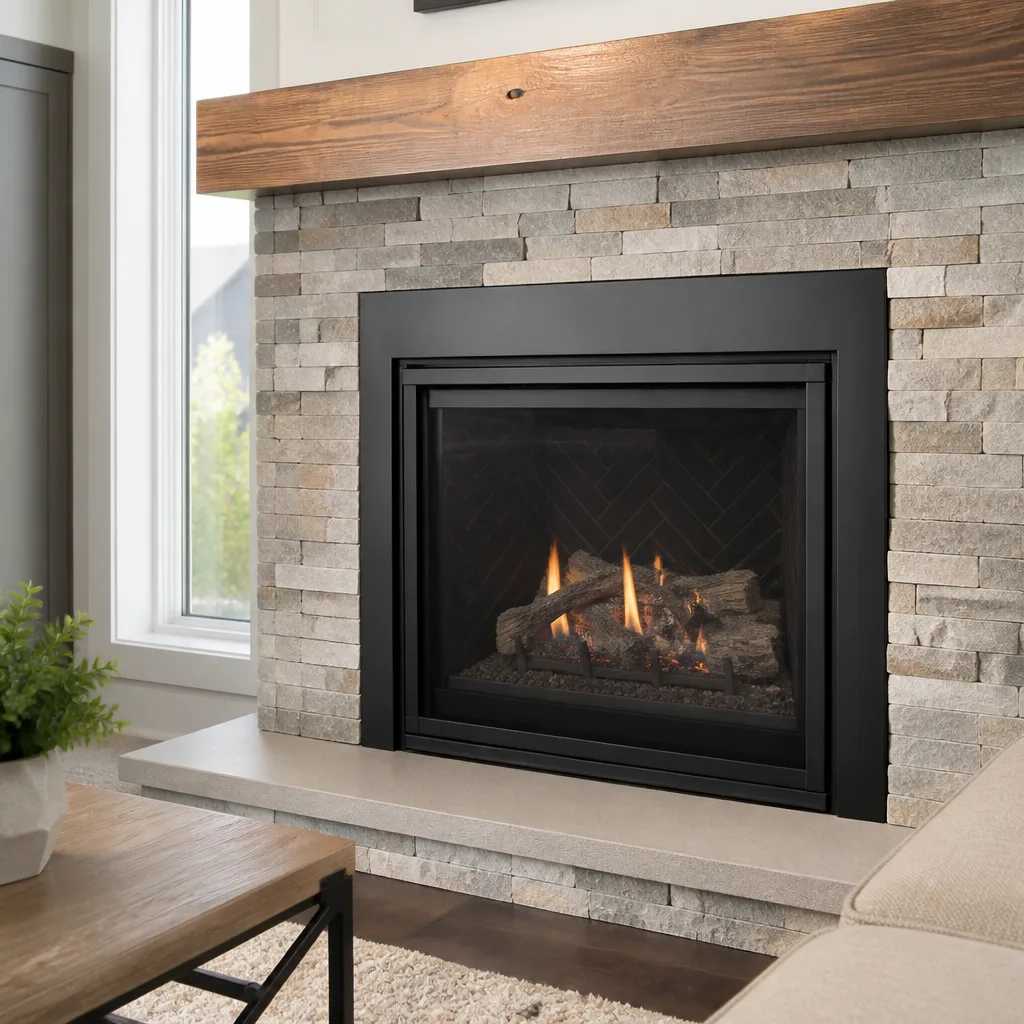
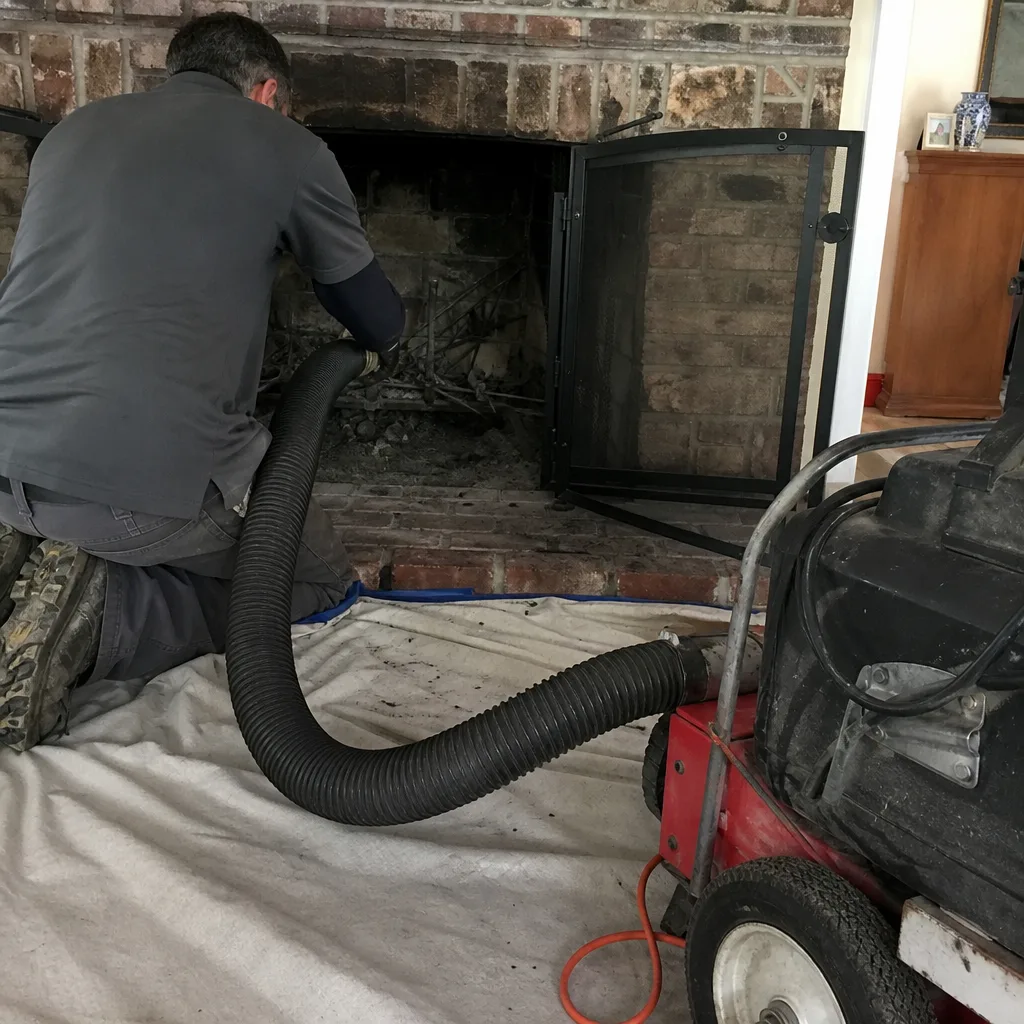 Before
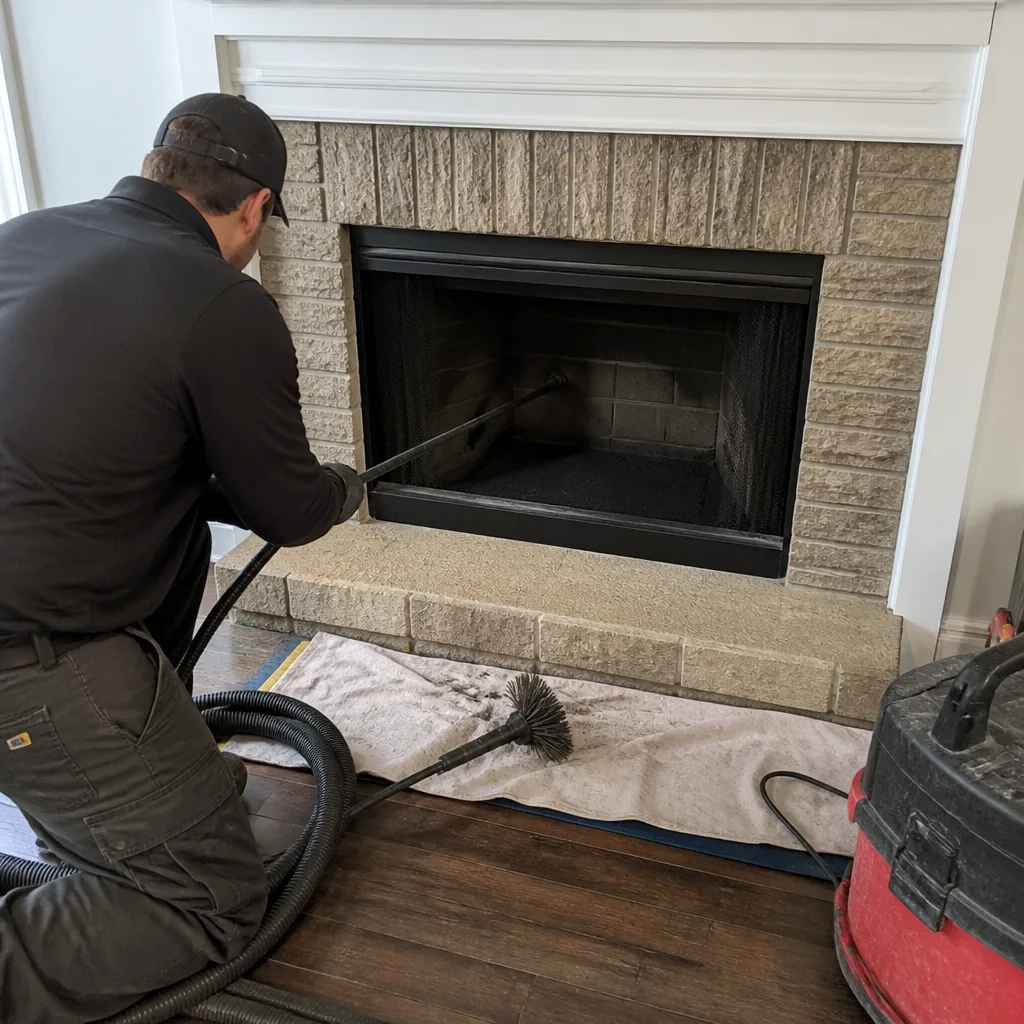 After
After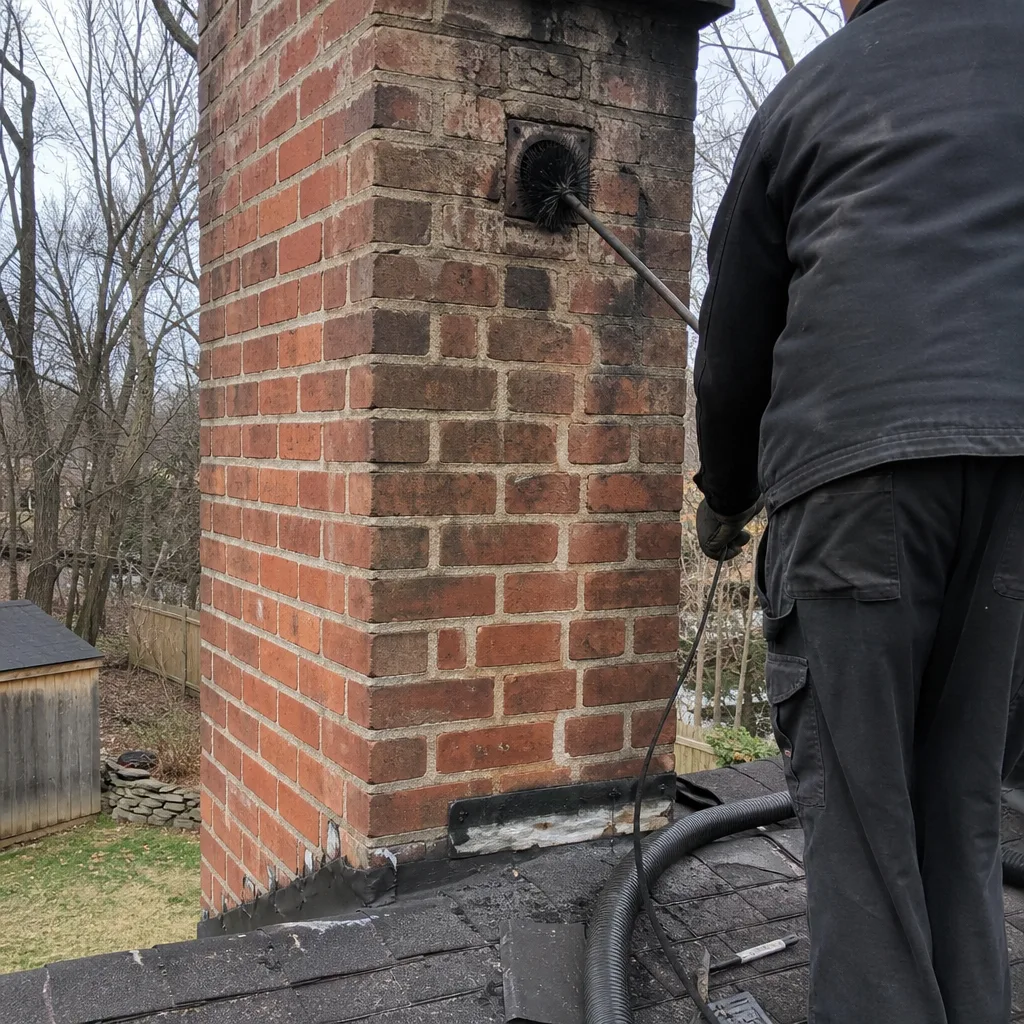 Before
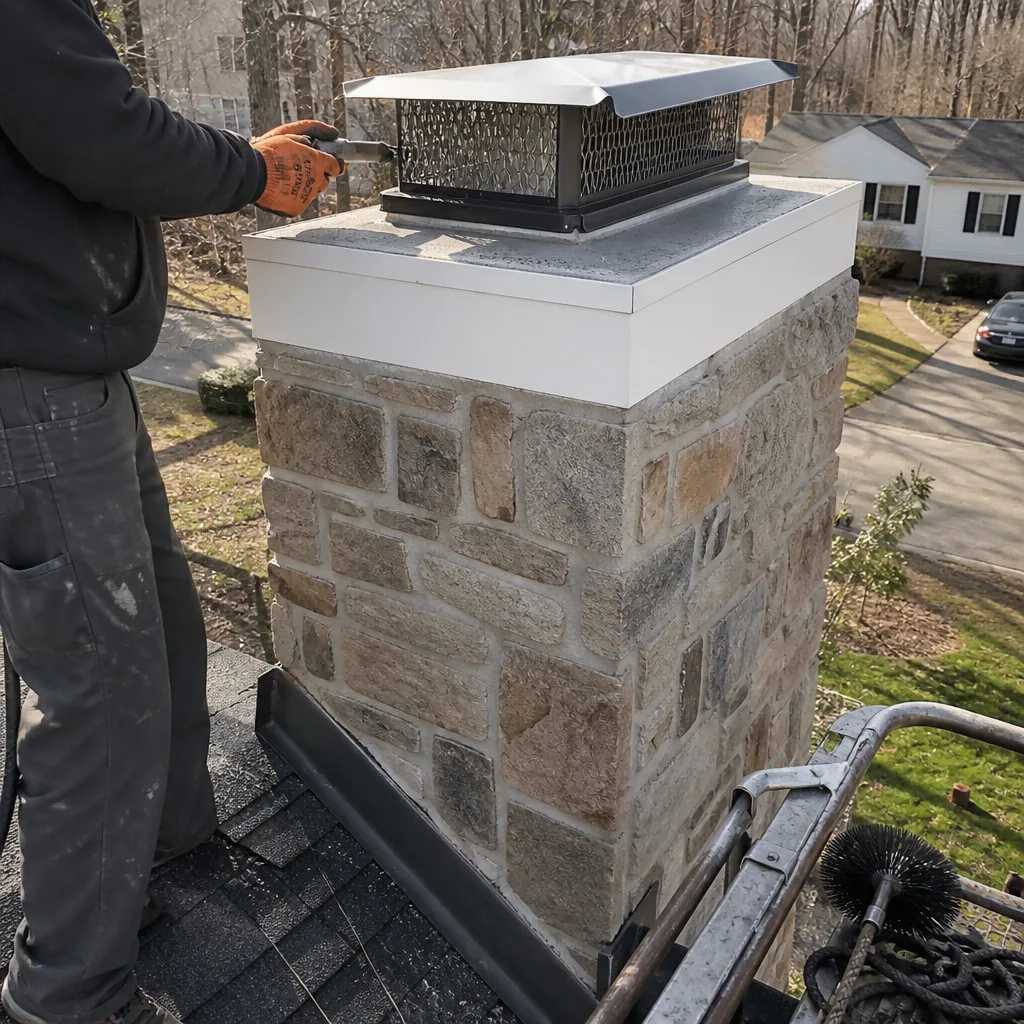 After
After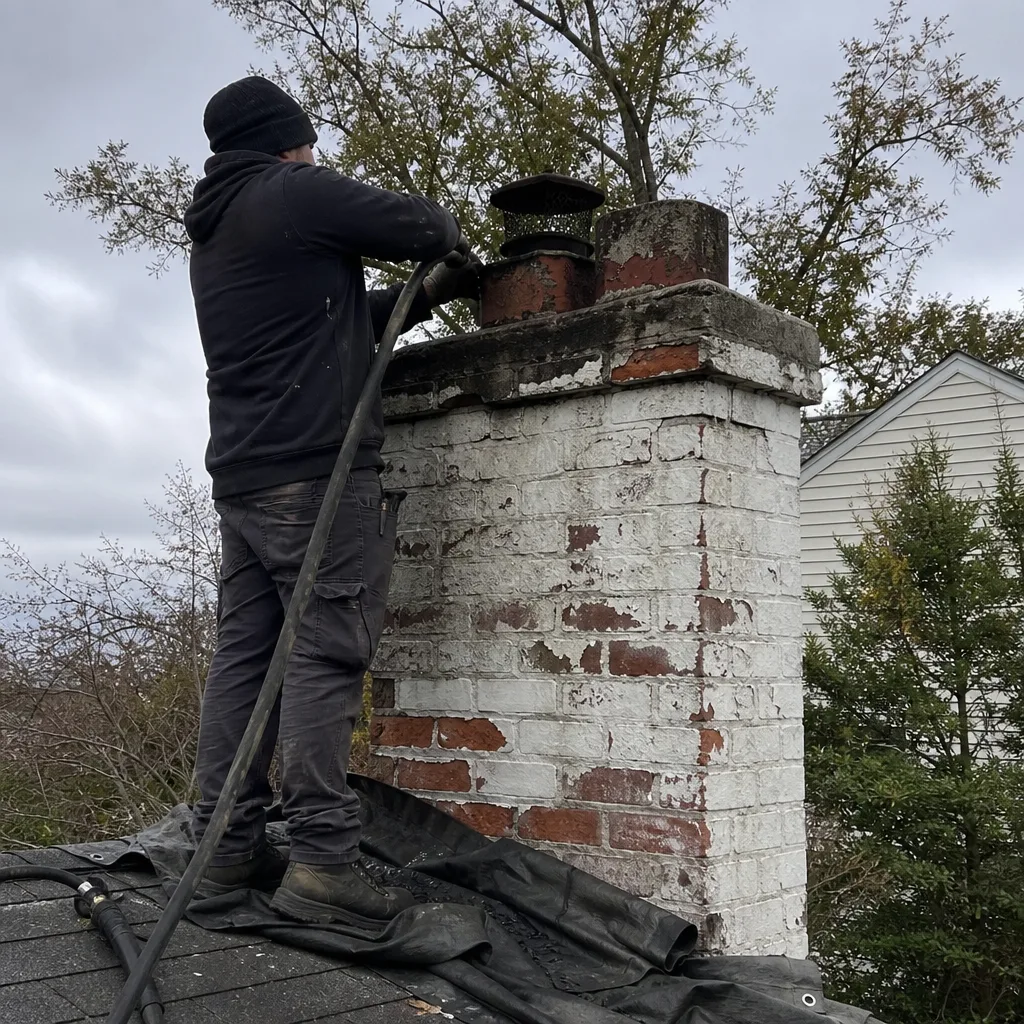 Before
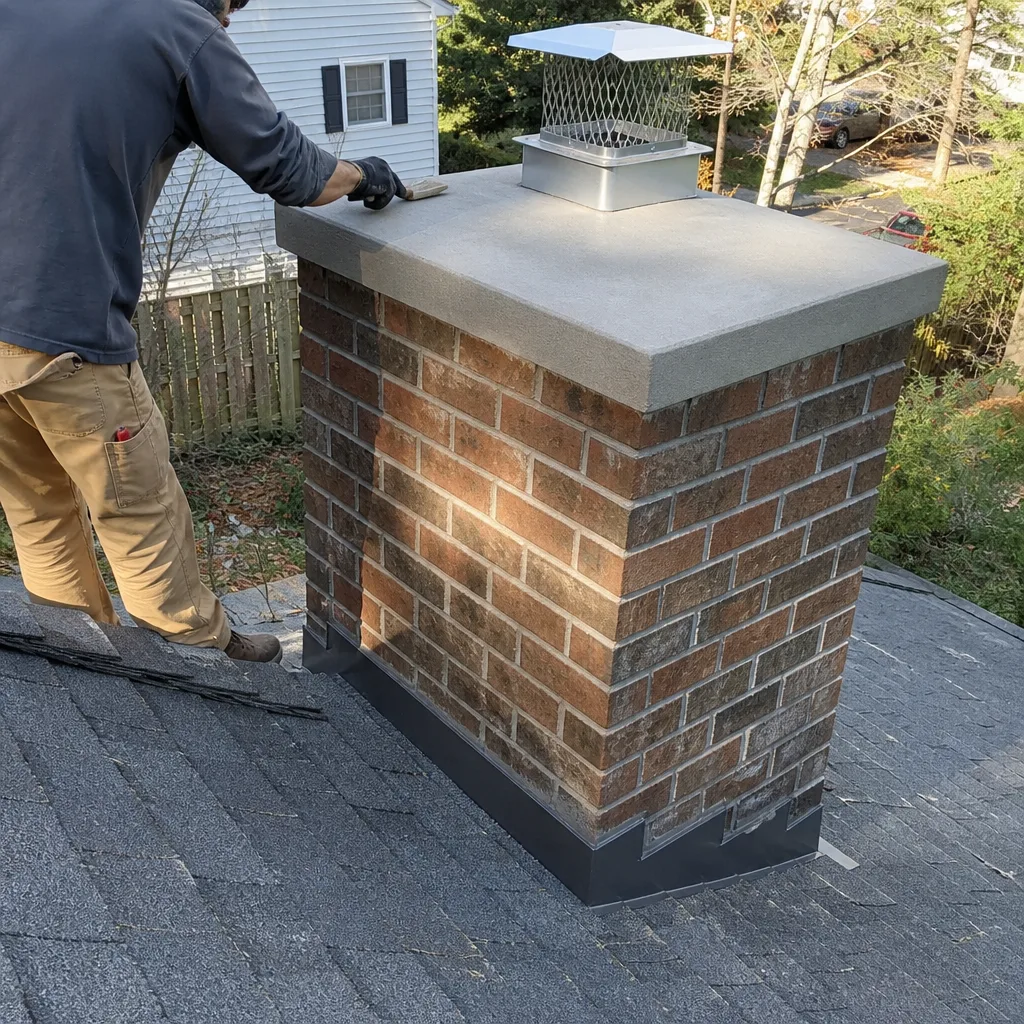 After
AfterDIY vs Professional Chimney Cleaning: The Alexandria Homeowner’s Decision Guide
Every winter in Alexandria, a homeowner stands in their living room holding a $40 brush kit from a big-box store, looks up the flue, and wonders if this is the year they skip the sweep. Here’s the counterintuitive truth we’ve learned from 38,000+ inspections since 2009: the brushing is almost never the problem. A careful DIYer can remove soft soot from a straight flue about as well as a rookie tech on his first week. What that DIYer cannot do is see the hairline crack in the clay tile behind the soot, or the Stage 3 creosote pocket glazing the smoke shelf above the damper. This guide draws that line plainly: what a brush kit actually accomplishes in an Alexandria home, what it cannot, and the three scenarios where skipping the camera costs far more than the sweep ever would.
Quick Answer
DIY chimney cleaning can remove loose soot and light Stage 1 creosote from a straight, accessible flue, but it cannot inspect the liner, smoke chamber, or crown for the damage that determines whether the fireplace is safe to use. In Alexandria, where most chimneys are clay-tile systems 40 to 90 years old, the inspection gap is the whole game: a professional Level 2 sweep with camera documentation costs $229 to $389 and produces a written record; a DIY brush kit removes deposits without producing a diagnosis. If your goal is a clean flue, DIY works. If your goal is to know your fireplace won’t burn the house down, the brush kit was never the tool for that job.
Table of Contents
- What DIY Chimney Brushing Actually Accomplishes
- The Inspection Gap: Cleaning Without a Diagnosis
- The Honest Cost Comparison: Brush Kit vs. Level 2 Sweep
- Alexandria-Specific Factors That Shift the DIY Calculus
- The One Scenario Where DIY Makes Clear Sense
- The Three Scenarios Where DIY Creates Liability
- Understanding Creosote Stages: What You’re Actually Brushing
- Gas Log Retrofits and the Creosote Chemistry Problem
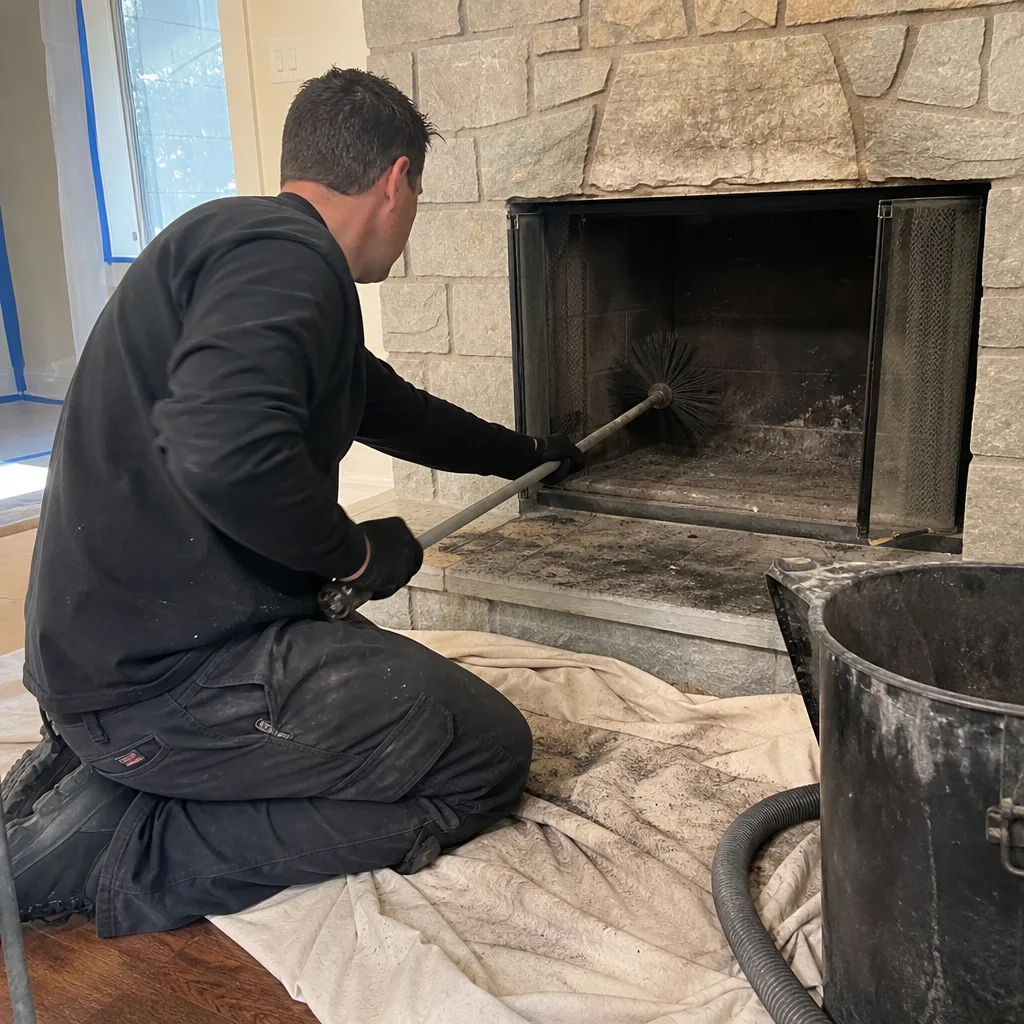
BeforeAfterWhat DIY Chimney Brushing Actually Accomplishes
Let’s be fair to the brush kit. It’s not a scam product. A polypropylene chimney brush on fiberglass rods, run up and down a flue, will remove loose soot and light powdery creosote from the flue walls. In a fireplace that burns dry hardwood with good draft, that’s often most of what’s there. The brush scours the flue liner surface anywhere the rods can reach. That’s the first honest boundary: reach.
DIY brushing performs on par with professional brushing under four specific conditions:
- Straight interior flue: The flue rises vertically from the fireplace to the chimney cap with no offset, no elbow, no corbeled smoke chamber turn. Most 1960s split-levels in Alexandria’s West End have this geometry.
- Light deposit profile: The creosote is Class I or Class II: flaky, dusty, or granular. You can see flue tile texture through it. This is what you get from a season of weekly fires with seasoned oak.
- Intact liner access: The clay tiles are undamaged enough that rod tips glide over them instead of catching on crack edges. A cracked tile will grab the brush head and tear the bristles off - that’s a finding, not a cleaning.
- Standard damper throat: The damper opens fully and the smoke chamber is reachable from below with a hand brush. You can visibly confirm the smoke shelf area before you start.
In those conditions, a careful homeowner with a $40 to $90 kit can do a mechanically competent job. We say that without flinching. The brush work is not magic, and pretending otherwise insults the reader’s intelligence. The limit is not the brushing. It’s the seeing.
The Inspection Gap: Cleaning Without a Diagnosis
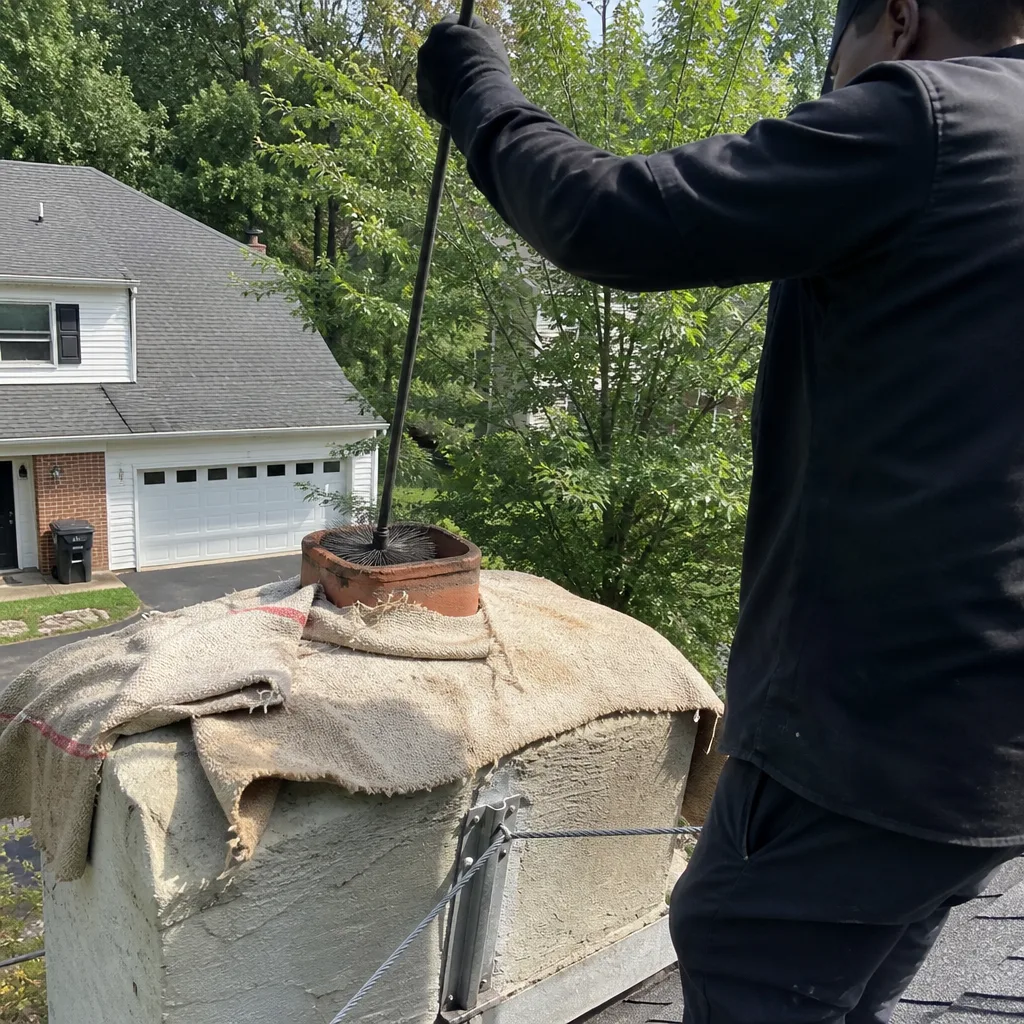
The brushing removes deposits. The inspection finds damage. Those are different jobs requiring different tools and different training. In our Chimney Cleaning & Sweep in Alexandria work, the sweep and the Level 2 inspection are one visit, but they are adjacent skills: one makes the flue clean, the other makes the flue known.
Here’s what a brush cannot tell you, even on a perfectly brushed flue:
- Liner cracks and missing tile sections: A clay tile with a hairline fracture holds soot in the crack line. After you brush, the crack is visible only if you know to look for the line, and from a rooftop you can’t see the tile faces behind the flue’s curve. Camera down the flue sees all of it.
- Spalling: Clay tile surfaces flake off in thin layers under decades of heat cycling. Spalled tile leaves thin spots in the liner wall. A brush glides right over spalled zones, and might even accelerate flaking if the tiles are already loose.
- Smoke chamber deterioration: The corbeled brick step area above the damper is the least visible part of any DIY job. Cracks there vent heat and creosote vapor directly into the framing around the fireplace. This is the most common serious finding in Alexandria row homes built before 1950.
- Crown cracks and water entry: The concrete crown at the chimney top fails with freeze-thaw cycling. Alexandria gets 30 to 40 freeze-thaw events per winter. A homeowner brushing the flue never looks at the crown with a water-entry eye.
- Stage 3 creosote pockets: Glazed, tar-like creosote forms in the smoke chamber and high flue bends where draft cools the vapors. A brush skids over it. Removing Class III creosote requires mechanical rotary tools or chemical treatment, never a homeowner’s poly brush.
What we’re describing from our Alexandria service area matches what NFPA 211 has said for decades: a Level 1 inspection (what a homeowner does with a flashlight and a brush) is a visual check of accessible surfaces. A Level 2 inspection adds the camera, the smoke chamber, the attic pass-through, and the crown. Clause 4 of the Haven Standard requires a documented photo record on every job - not because it’s nice to have, but because that record is the only way a homeowner can independently evaluate what the inspection found. We made that the default in 2009, and it has been the standard in our work ever since.
The Honest Cost Comparison: Brush Kit vs. Level 2 Sweep
Alexandria homeowners ask the price question first, and they should. Our Chimney Cleaning Cost Breakdown: The Alexandria Homeowner’s Reference for 2026 lays out the real numbers for this market in writing because that’s the only way to compare honestly.
| Item | DIY Brush Kit | Professional Level 2 Clean |
|---|---|---|
| Equipment cost | $40-$110 one-time (brush kit, rods, drop cloth, gloves, goggles) | Included in service price |
| Time cost | 3-5 hours for first-time DIYer, including roof access setup | 1.5-2 hours of your passive time |
| Service price in Alexandria | $0 out of pocket beyond kit | $229-$389 typical for Level 2 clean with camera inspection |
| What you get | A brushed flue; no record, no photos, no measurements | Written scope, written price before work starts, photo record of the flue and finding list |
| What you don’t get | Any finding about liner condition, smoke chamber, crown, or water entry | - |
| Cost of a miss | $0 if flue was fine; $3,000-$8,000 for a liner replacement after a chimney fire that a camera would have flagged | $0; findings are documented and you decide what to do with them |
The DIY savings are real if the flue is in good shape. A homeowner in Seminary Hill with a 2018-built home and a stainless liner can brush annually with a kit and save $229 to $389 per year, no argument. The bet is that the flue stays fine. In a 1962 clay-tile chimney in Del Ray that has never been camera-inspected, the bet is different: you are betting the liner has no hidden fracture. If you lose that bet, the chimney fire happens before you know you’ve lost. That’s the cost of the miss, and no brush kit covers it.
Alexandria-Specific Factors That Shift the DIY Calculus
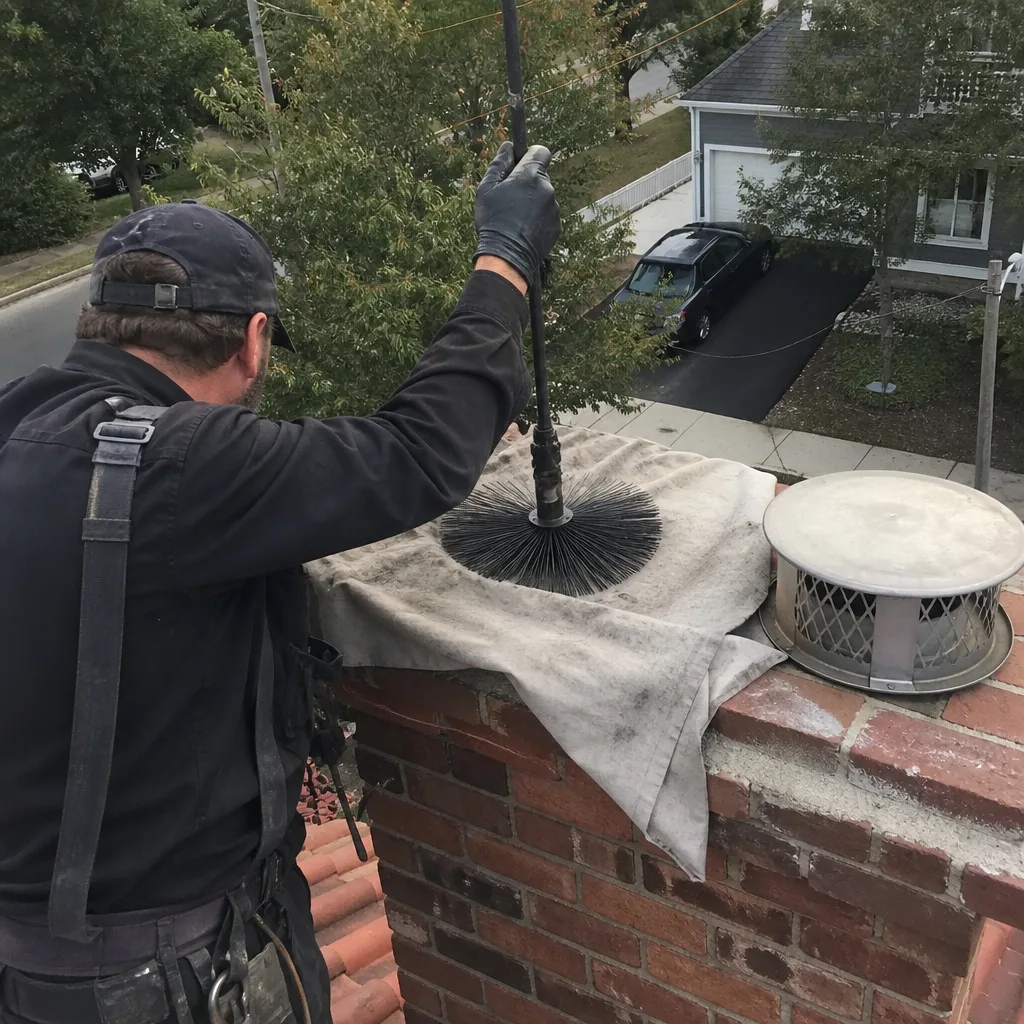
Alexandria is not a generic suburb. The housing stock here changes the DIY equation in three specific ways that a national guide will never mention.
Old clay-tile systems dominate the pre-1970 stock. Old Town, Del Ray, Rosemont, and North Ridge are full of chimneys built when clay tile was the standard and nobody anticipated 50 years of freeze-thaw cycling at the crown line. Clay tiles crack from water, from heat, from settling. A 60-year-old clay flue that has never had a camera dropped down it is, statistically, more likely to have a finding than not. DIY brushing on an unknown clay system is cleaning a surface you have never seen the back of.
Row-home conversions have offset flues and rebuilt smoke chambers. Alexandria’s row homes and townhomes frequently had their fireplaces converted across decades: coal to wood, wood to gas, gas back to wood. Each conversion moved the damper, altered the smoke chamber, or added a liner offset. A flue that leaves the firebox and immediately jogs left to meet the original chimney stack is the single hardest geometry for a DIY brush. The brush catches on the offset bend, the rods bind, and the homeowner concludes they’ve cleaned to the top when they’ve only reached the first turn.
Humid Mid-Atlantic winters change creosote moisture content. Alexandria’s winter air holds moisture, and chimneys here run cool at the top. Cool flue gases condense creosote vapor into wet, sticky deposits high in the flue. A homeowner brushing from the top down will feel the brush slide through this zone and assume they got it all. What they don’t know is that wet creosote compresses against the tile and dries to a glaze within weeks. Six months later it’s Class III, and the brush kit never touches it.
Those three factors explain why our crew sees more Stage 3 creosote pockets and hidden tile fractures in Alexandria than in neighboring jurisdictions with newer stock. It’s not that Alexandria homeowners are worse at burning; it’s that the houses are older, the geometry is more complicated, and the climate is less forgiving. All three of those compound the limitation of a brush you cannot see around corners with.
The One Scenario Where DIY Makes Clear Sense
We will say it in plain words, because this is the most honest paragraph in this guide: if your fireplace is in a home built after 2010, you burn dry hardwood no more than once a week from November through February, and you have had a professional camera inspection within the last two years that documented a clean liner, a straight flue, and no smoke chamber findings, then a DIY brush cleaning between professional inspections is reasonable. That’s the whole scenario. A newer home, a known-flue baseline, light use, brush between camera visits.
In that case, here is the step sequence that works:
- Verify the baseline: A Level 2 camera inspection within the last 24 months showed an intact liner and no Stage 3 creosote.
- Use a correctly sized brush: Measure the flue inner diameter and buy a poly brush within half an inch. A brush too small skates over deposits; a brush too large jams and can crack clay.
- Brush from the top down with the damper sealed: Work from the roof with the damper closed and a drop cloth catching fall from below, or brush from below with flexible rods if the flue is straight enough.
- Remove the smoke shelf debris by hand: Reach through the damper throat with a small hand brush and scoop. This is where most of the fall lands.
- Schedule the next professional camera inspection in 24 months, not 36: You are trading annual professional work for a two-year cycle. Keep the cycle tight.
That is the entire universe where DIY makes sense for an Alexandria fireplace. It is narrow because the margin for error is narrow: you are relying on a prior camera record to declare the flue safe to brush in the blind. If the flue changes between inspections - and clay tiles crack without announcing themselves - you are brushing over a problem you cannot see.
The Three Scenarios Where DIY Creates Liability
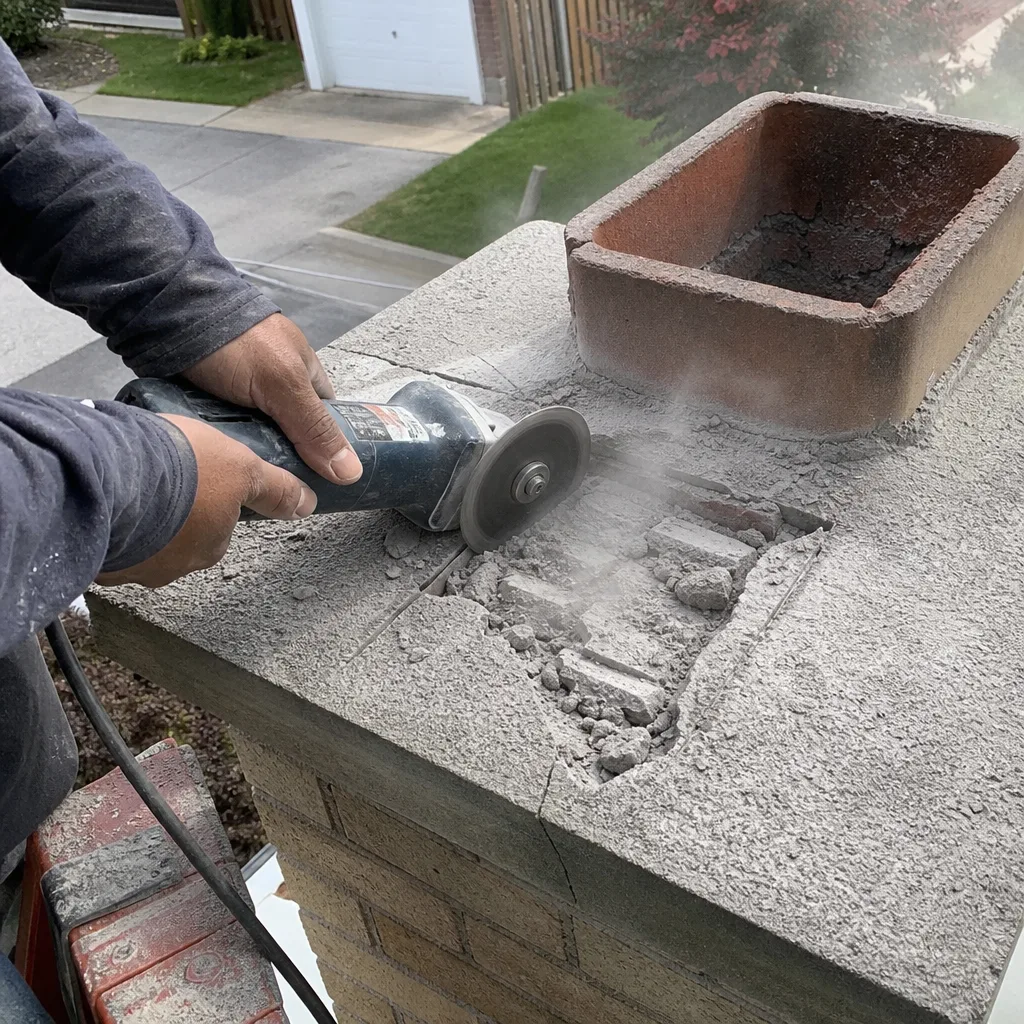
Now the flip side, stated just as plainly. Three scenarios where a DIY brush creates liability for the homeowner, not savings.
1. The home has an active fireplace but no documented flue history. You bought the house in 2017 and the previous owner left no inspection records. You have burned for six winters. You do not know the liner condition, the smoke chamber condition, or the crown condition. A DIY brush in this scenario is not maintenance; it’s a guess with fire attached. In our Chimney Repair in Alexandria work, we regularly take calls from homeowners who brushed for years and then had a chimney fire trace back to a spalled tile they could not see from the roof. The $229 sweep would have found it. They paid $6,000 instead.
2. There was a nearby chimney fire, water leak, or renovation that touched the chimney structure. If water has been running down the flue - and Alexandria crown cracks are common - the tiles may be fractured and the mortar joints washed out. (See How to Hire a Chimney Cleaning Contractor in Alexandria: A Step-by-Step Guide for what to ask about water damage history.) If a chimney fire occurred in the past, the tiles are heat-shocked and the mortar is glazed. If a renovation moved the fireplace or added a gas log set, the flue geometry changed. In each case, a brush cleaning is a cosmetic action on a structural unknown.
3. The fireplace shows any of the red-flag symptoms: smoke rolls into the room when the fire is lit, a tar-like smell arises from the firebox in summer humidity, white staining deflects down the exterior brick face, or the damper is rusted and difficult to operate. These symptoms indicate problems that live above and behind what a brush reaches. They are Fireplace Services in Alexandria calls, not brush-kit calls.
In any of these three scenarios, the brush kit creates a false reassurance that is worse than doing nothing at all. At least if you do nothing, you know you haven’t inspected. If you brush, you feel like you have maintained. That’s the dangerous gap this guide exists to close.
Understanding Creosote Stages: What You’re Actually Brushing
Creosote is not one substance. It forms in three stages, and the stage determines whether a brush can remove it. This is the trade vocabulary, defined in plain language.
Stage I: Powdery or flaky soot. Dry, dusty, brown or black, with visible flue tile texture behind it. This is what dry hardwood with good draft produces. A poly brush removes Stage I cleanly. This is the deposit profile where DIY brushing performs on par with professional brushing.
Stage II: Granular or honeycombed crust. Chunks of hardened creosote that look like dark sand glued to the flue wall. It forms when the flue runs cooler or the wood has higher moisture. A brush will knock some of it loose but leave residue in the mortar joints and tile texture. Professional removal involves more aggressive brushing and post-brush inspection to confirm the tile behind is intact.
Stage III: Glazed, tar-like coating. Shiny, hard, and black, like glassy road tar. It forms in cool, high-moisture zones: the top of the flue, offset bends, and the smoke chamber. It is highly concentrated fuel, and its ignition is what most chimney fires are made of. No poly brush removes Stage III. It requires rotary mechanical cleaning with chains or chemical treatment, followed by a camera check to see what the glaze was hiding.
Here is the Alexandria reality: most of the chimneys we inspect in this city have Stage I in the visible flue body and Stage III hiding at the first offset bend and in the smoke chamber. The homeowner brushing from the roof sees the Stage I come off and never knows the Stage III was behind the bend. That’s not doing half the job. That’s doing the visible tenth of the job and mistaking it for the whole.
Gas Log Retrofits and the Creosote Chemistry Problem
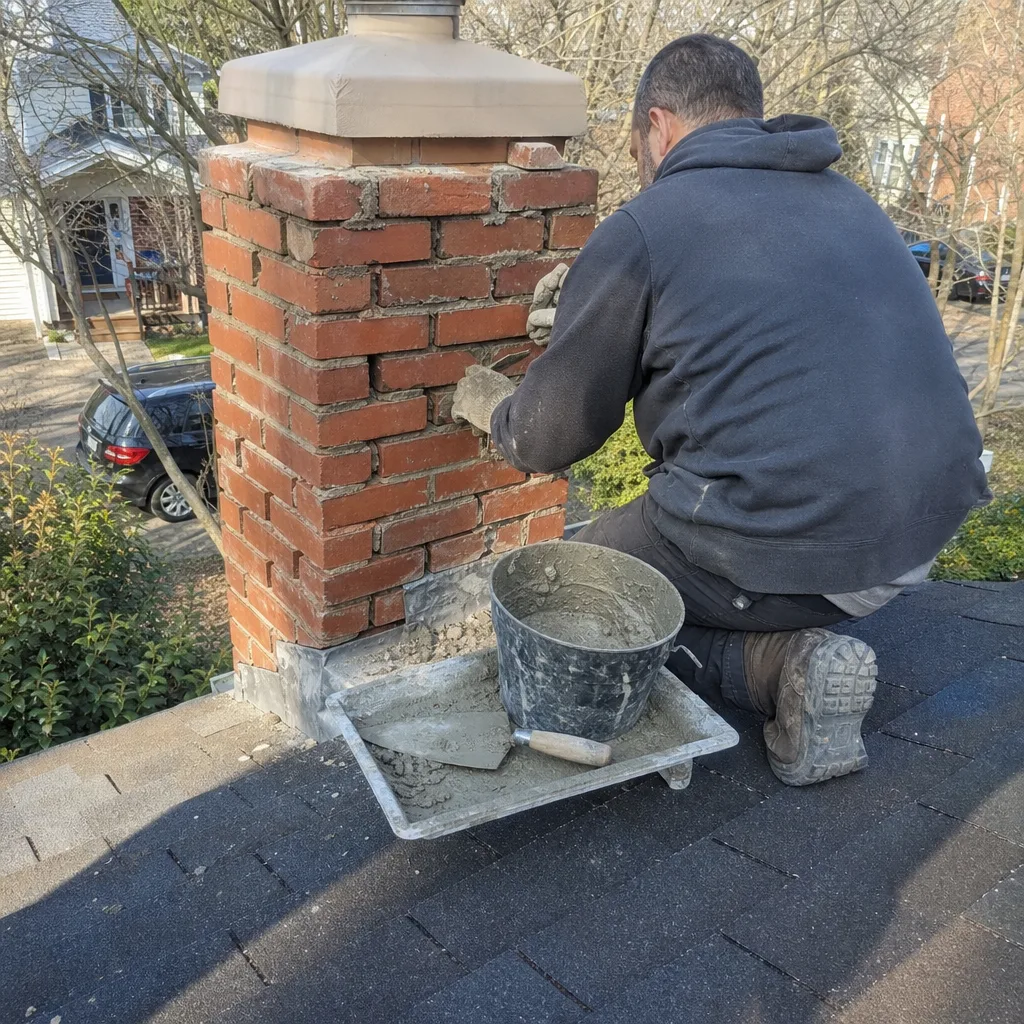
One more Alexandria-specific pattern that national DIY guides never cover: the gas-log retrofit. A homeowner with a drafty old fireplace installs a vented gas log set in 2015. They enjoy the fire for eight years. Then one winter they decide to burn real wood again - or they sell the house to someone who does. The flue has not been inspected since the gas set went in. What happened in those years?
Gas logs burn cool relative to wood. A cool flue condenses more vapor. But the bigger problem is what the gas set did to the old wood-burning deposits. When gas burns over old creosote, the low, moist heat bakes the creosote in a way that converts loose Stage I and Stage II into a heavier, denser residue. The creosote chemistry changes: what was brushable becomes a semi-glazed coating that bonds to the tile. Our techs can feel the difference on the brush head immediately.
In an Alexandria row home where a flue was converted from wood to gas in the 1980s and then back to wood in the 2010s, the flue liner has been through cycles that no homeowner can assess with a brush. The only honest answer is a camera. Clause 4 of the Haven Standard exists specifically for these cases: a documented photo record of what the camera saw, so the homeowner isn’t taking a tech’s word for what’s behind the bend. If a homeowner in this scenario brushes and burns, they’re using a fireplace whose flue history is a mystery to them.
Common Mistakes to Avoid
- Brushing a flue that has never been camera-inspected. You are cleaning a surface you cannot see, in a system whose failure mode is house fire. The $229 to $389 camera clean is the baseline. Brush between baselines, not instead of them.
- Using a metal brush on a clay flue. Metal bristles score clay and can chip cracked tile edges. Poly brushes only on clay. Metal is for stainless liners, and even then the brush must be sized right.
- Brushing from the top without checking the crown while you’re up there. In Alexandria’s freeze-thaw climate, the crown is the most likely part of the system to be failing. A homeowner on the roof for a brush cleaning is the perfect moment to look at the crown, but most never do because they don’t know what crown failure looks like.
- Assuming the brush reached the bottom. Offset flues in row-home conversions stop brush heads at the first bend. The rods turn, the brush jams, the homeowner backs out and thinks they finished. If you didn’t get brush resistance the whole length, you didn’t brush the whole flue.
- Treating gas-log flues like wood flues. The chemistry is different. Gas logs bake old creosote into a harder residue, and the venting requirements differ. A flue that has burned gas for years is not a simple brush job.
- Skipping the smoke chamber and smoke shelf. The fall lands there. Creosote forms there. The smoke chamber is the second most common place Alexandria chimneys fail, and it’s the one place a DIY brush never touches.
- Confusing a brushed flue with a safe flue. Clean is not inspected. A flue with no soot can still have a cracked liner, a failed crown, and a smoke chamber venting heat into the framing. The brush removed the symptom; the diagnosis is still outstanding.
When to Call a Professional
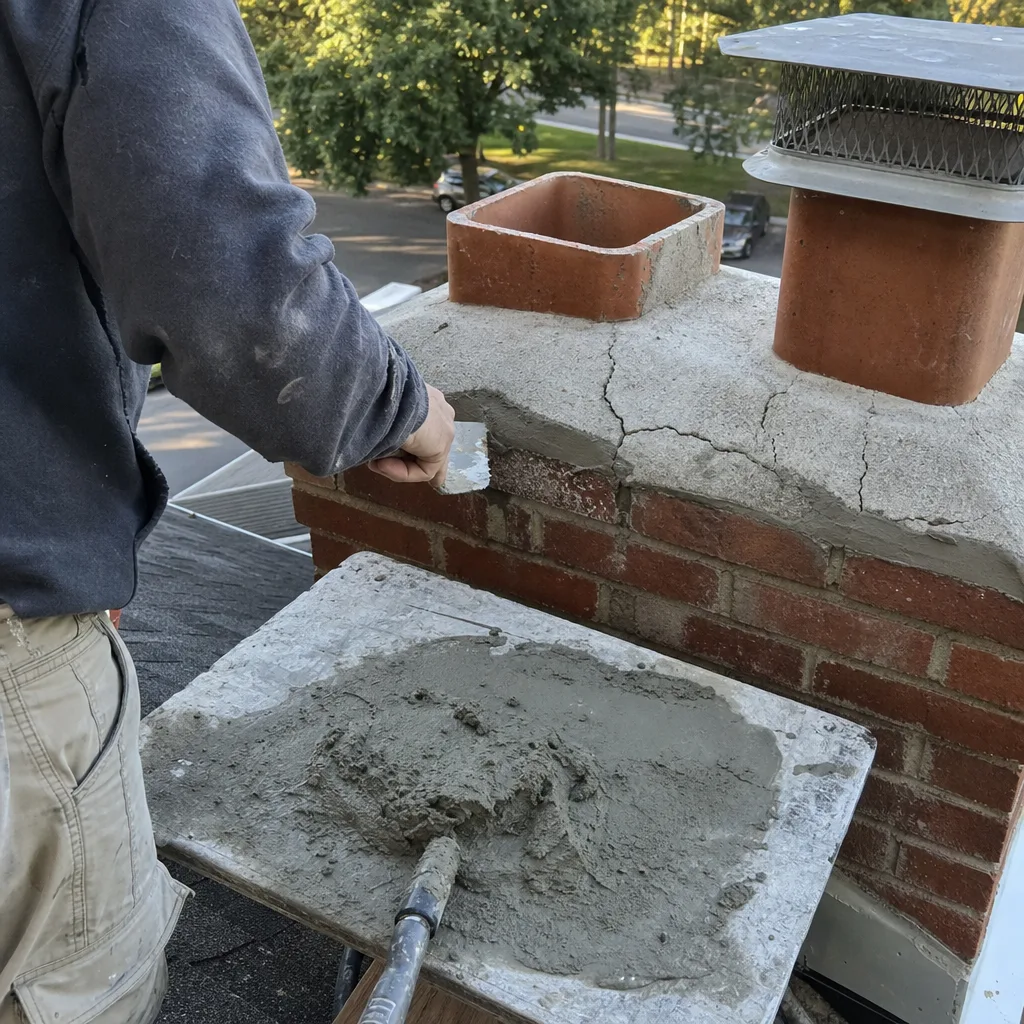
Call a professional when the question stops being “Is my flue clean?” and becomes “Is my chimney safe?” That question requires a camera, a written finding list, and a record you can hold in your hand. If your Alexandria home has a clay-tile chimney built before 2000 and no camera inspection on file, schedule the Level 2 clean with inspection and get the baseline the brush kit never provides. If your flue has an offset, a gas-log history, or any red-flag symptom, the brush has already been outmatched. Level Two Chimney Alexandria offers free written estimates in Alexandria. Call (240) 290-6726 and a live person answers, 24/7. We will send a named, background-checked tech with a written price and a written scope before any work begins, and you will walk away with a photo record of everything the camera saw.
Frequently Asked Questions
A professional Level 2 chimney cleaning with camera inspection in Alexandria typically costs $229 to $389, depending on flue height, deposit stage, and whether the smoke chamber requires extra work. This price includes a written scope, a written price before work starts, and a documented photo record on completion under the Haven Standard. Call (240) 290-6726 for an exact written quote - estimates are free and there is no pressure, ever.
The NFPA 211 standard, which our work follows, calls for an annual inspection and cleaning when the flue has accumulated 1/8 inch of creosote or the system has any finding requiring attention. In Alexandria’s humid winter climate, most wood-burning fireplaces need a sweep every year of active use; gas-log systems may go two to three years between visits depending on use. The inspection frequency remains annual even if the sweep is deferred, because the camera is what finds problems before they become fires.
Creosote accumulates in three stages, and Stage III glazed creosote is concentrated fuel. A chimney fire ignites that glaze, burns at temperatures that crack clay tiles, and can breach the flue into the framing around the fireplace. In our Alexandria repair work, the majority of liner replacements trace back to a chimney fire that started as Stage III creosote that went unremoved for years. The sweep costs $229 to $389; the liner replacement costs $3,000 to $8,000 plus any framing repair the fire required.
You should never accept a liner recommendation without seeing the camera footage. Clause 4 of the Haven Standard requires a documented photo record on every job, and if a tech recommends a liner, the camera images should show exactly why: a cracked tile, a spalled surface, a breach into the smoke chamber. If the images don’t show a finding, the recommendation doesn’t stand. If they do, the liner is the repair that keeps the fireplace legal to burn. Nothing is recommended in our Level Two Chimney Alexandria home service without images you can see for yourself.
Brushing a gas-log flue is usually the wrong move. Gas logs bake old creosote into a harder residue that a poly brush cannot remove, and gas venting systems have their own inspection requirements that a wood-brush approach misses. The right move for a gas fireplace is a camera inspection to establish the flue condition and venting path, then a cleaning method matched to what the camera found. Gas flues in Alexandria retrofits are among the most commonly misdiagnosed systems we see.
Homeowners can legally clean their own chimneys in Virginia. The insurance question is different: if a chimney fire occurs in a flue that has not been professionally inspected, your insurer will ask for the maintenance record, and a brush kit receipt is not a maintenance record. A professional Level 2 clean produces a written scope, a written price, and a documented photo record - the exact documents an insurer wants to see after a fire. That documentation is the difference between a covered claim and a denied one.
The Bottom Line
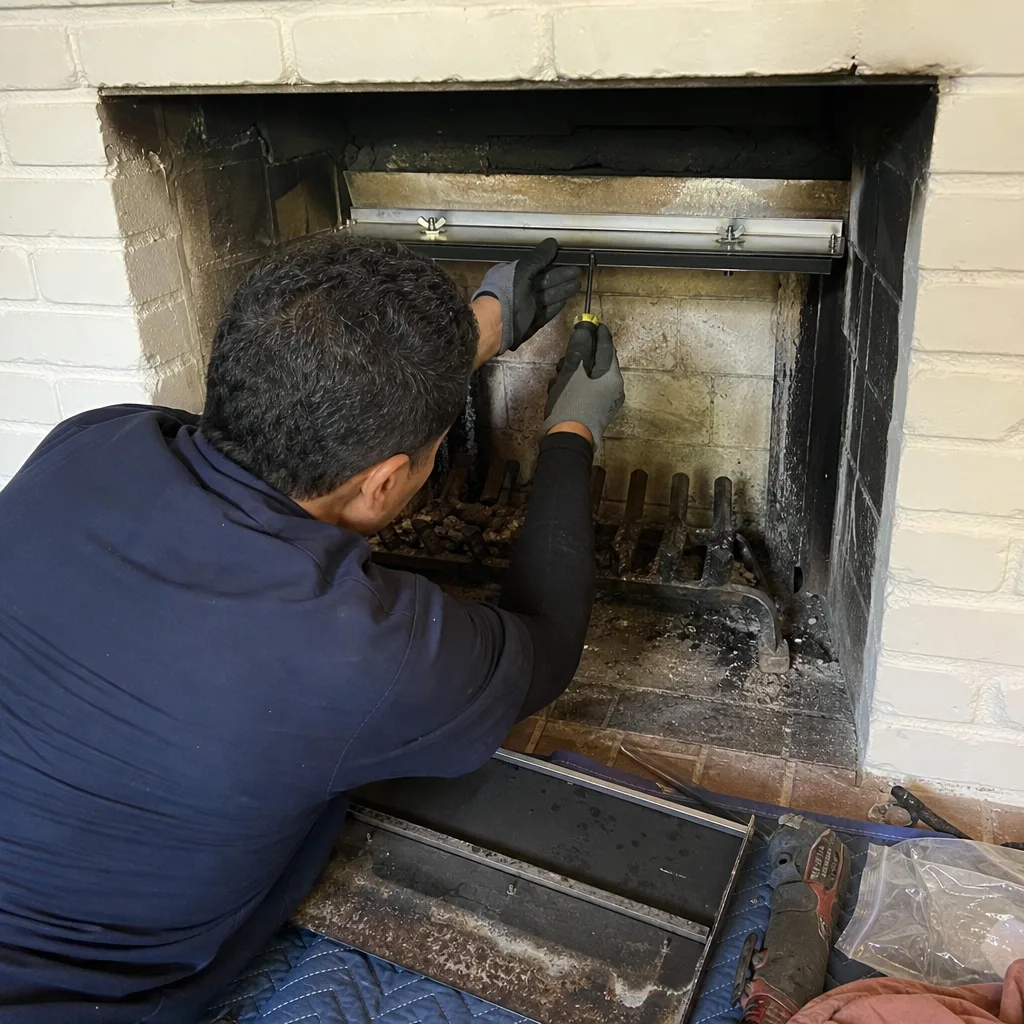
DIY chimney brushing is not the enemy. False confidence is the enemy. In an Alexandria home with a known, camera-documented flue and light use, a brush kit is a reasonable maintenance tool between inspections. In an older Alexandria home with a clay-tile system and no camera history, a brush kit is a gamble on a flue you have never seen. The sweep costs less than a brake job. The inspection costs less than a water heater. And the record of what the camera saw is the only thing that separates a maintained fireplace from a hopeful one. If you want the written price and the photo record, call Level Two Chimney Alexandria at (240) 290-6726. We have answered that phone live, 24/7, since 2009.
Written by Corrine Halstead, Owner at Level Two Chimney Alexandria, serving Alexandria since 2009. Browse our more guides & resources for fireplace safety.