
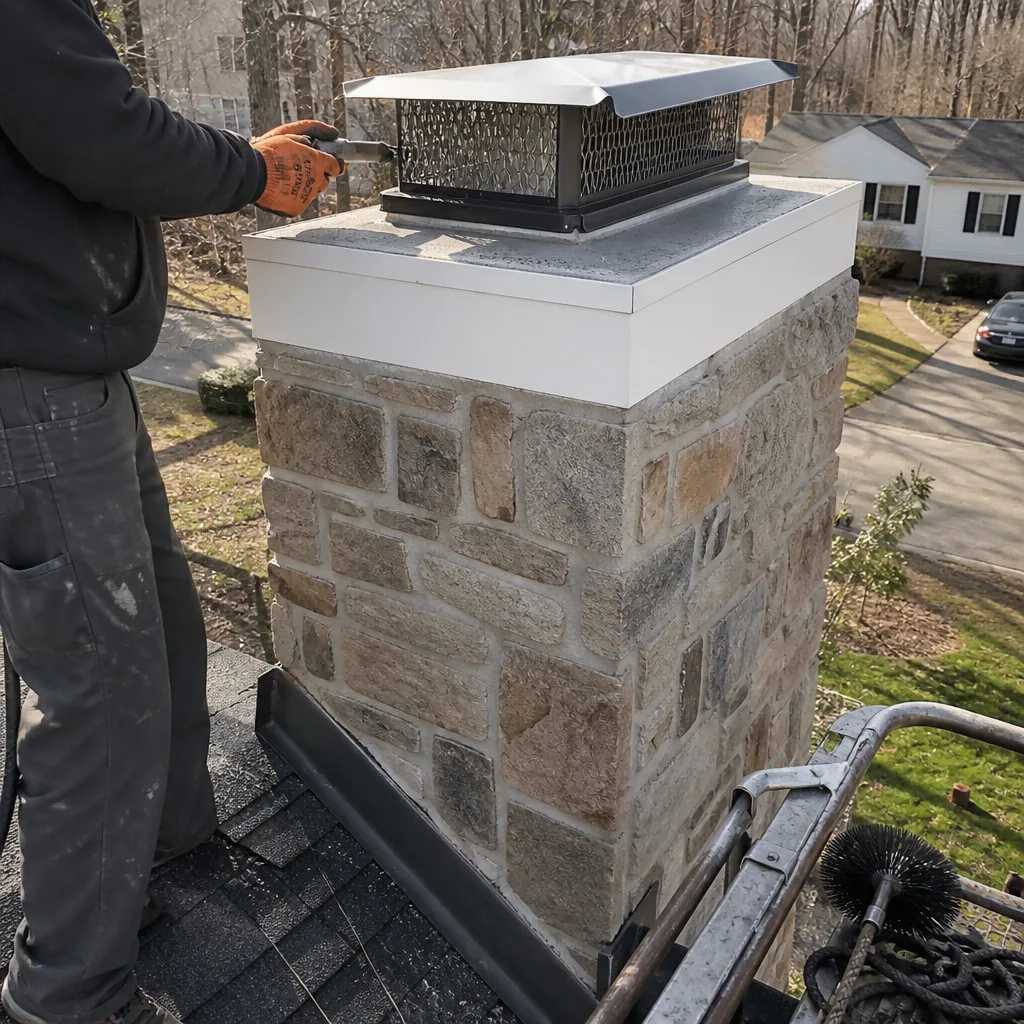
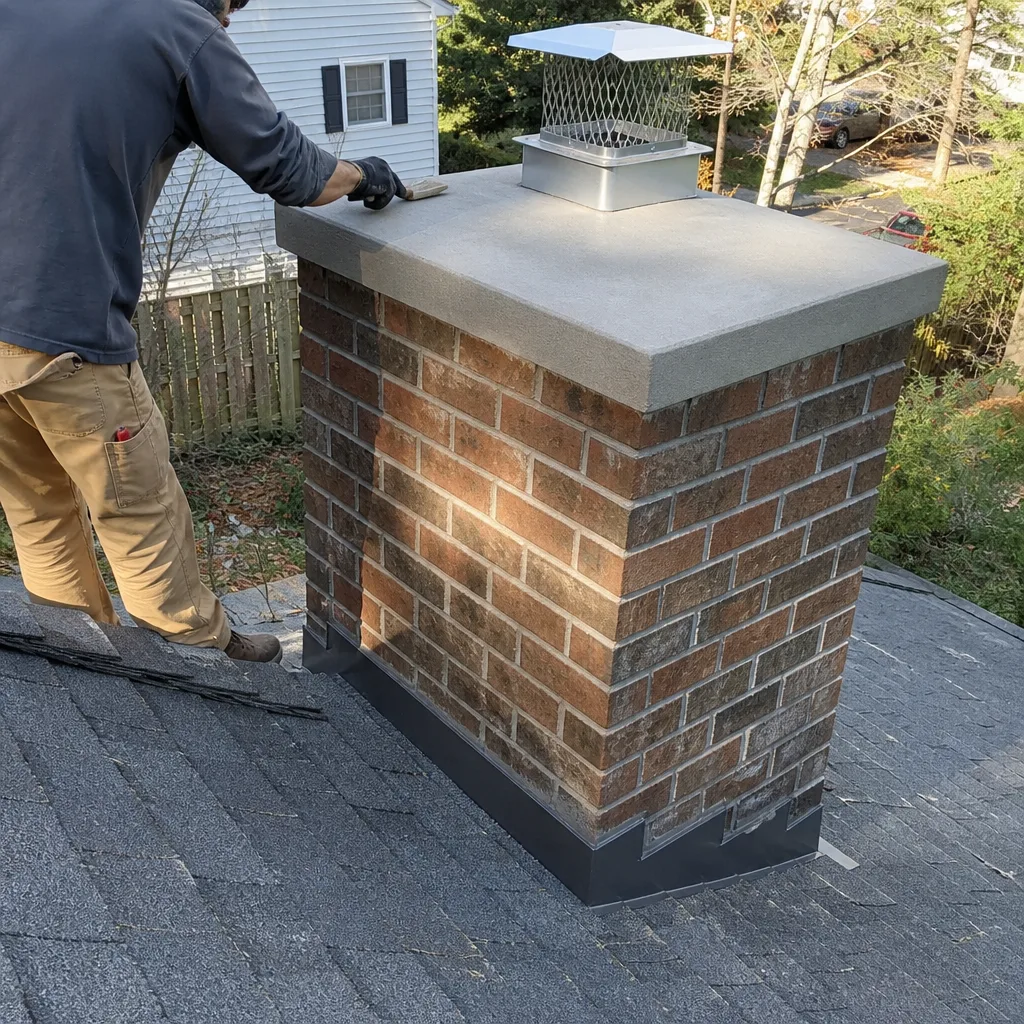
Level 1 sweep and inspection to the NFPA 211 annual standard - flue, crown, cap, and flashing checked and photographed
Chimney sweep logs do not sweep chimneys. They loosen some creosote - which then falls where a brush and vacuum still have to collect it.
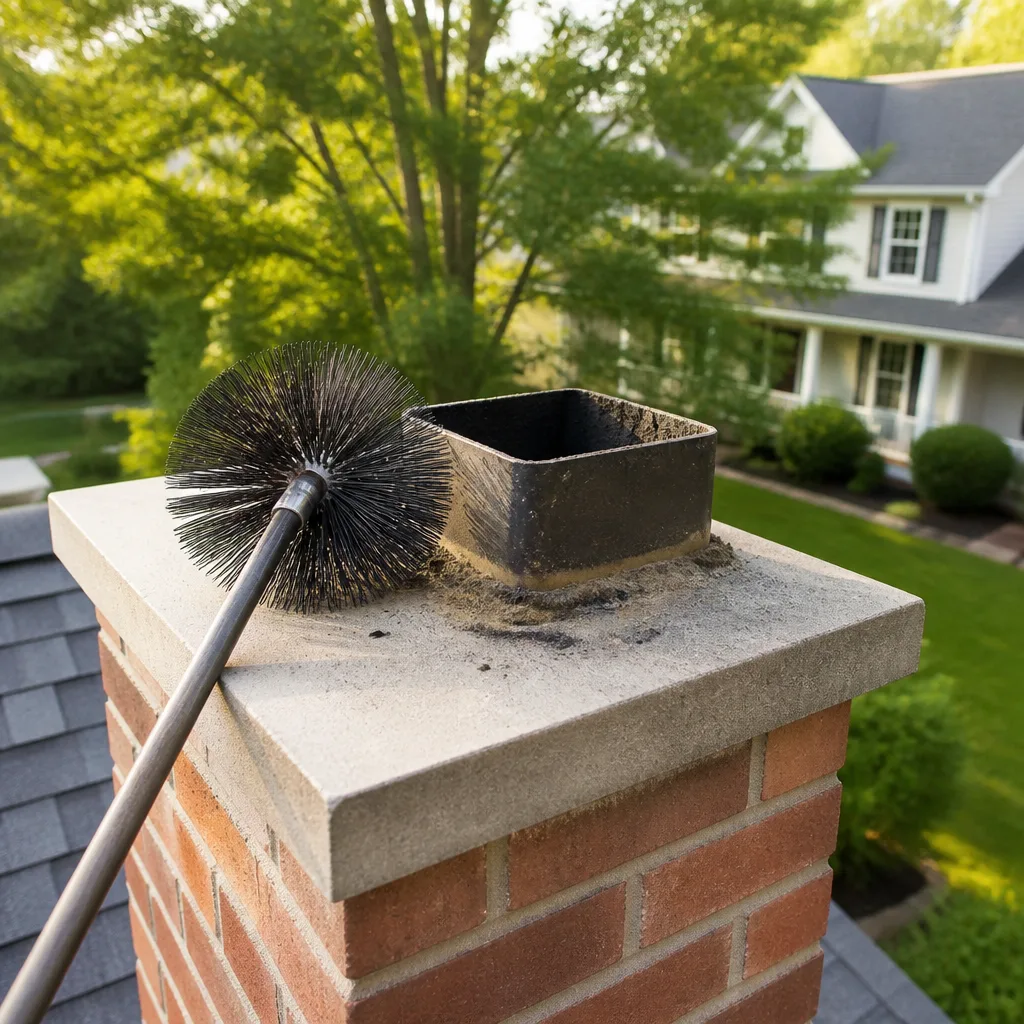
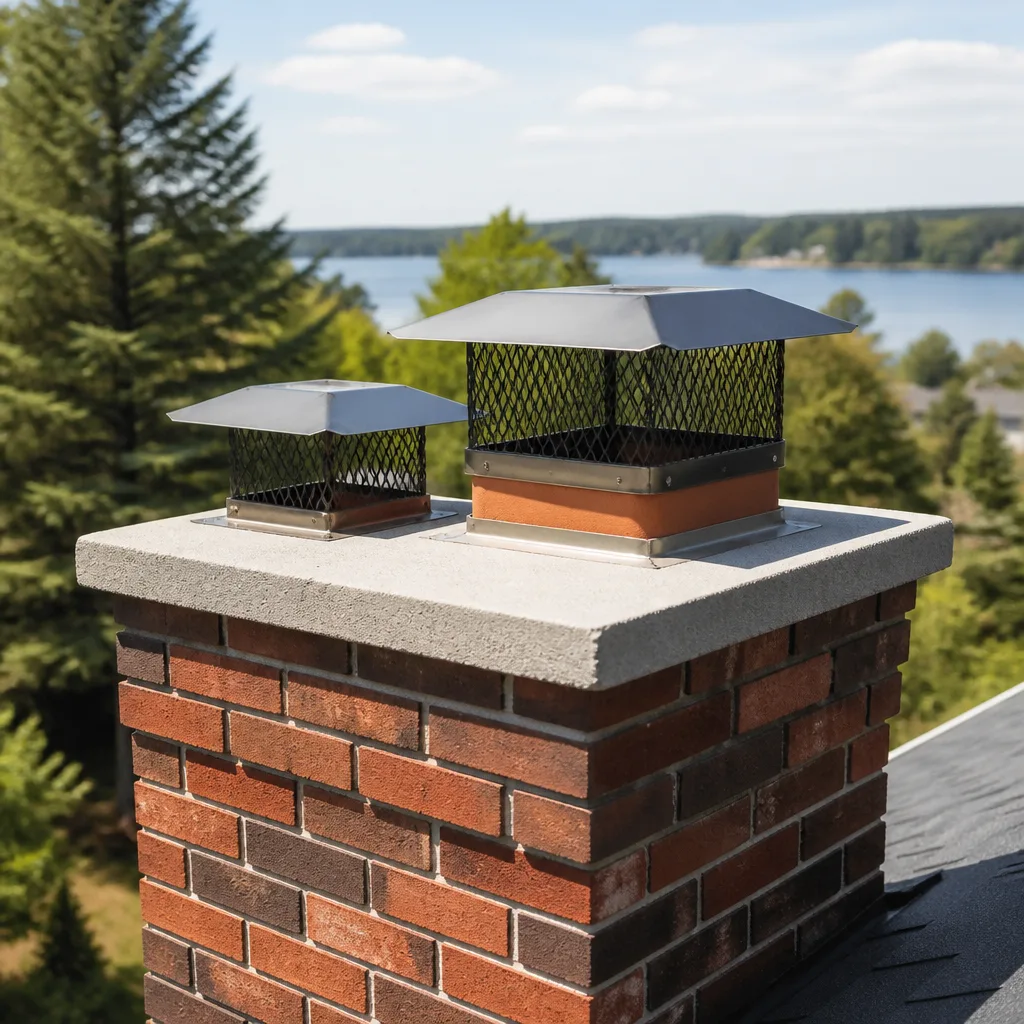
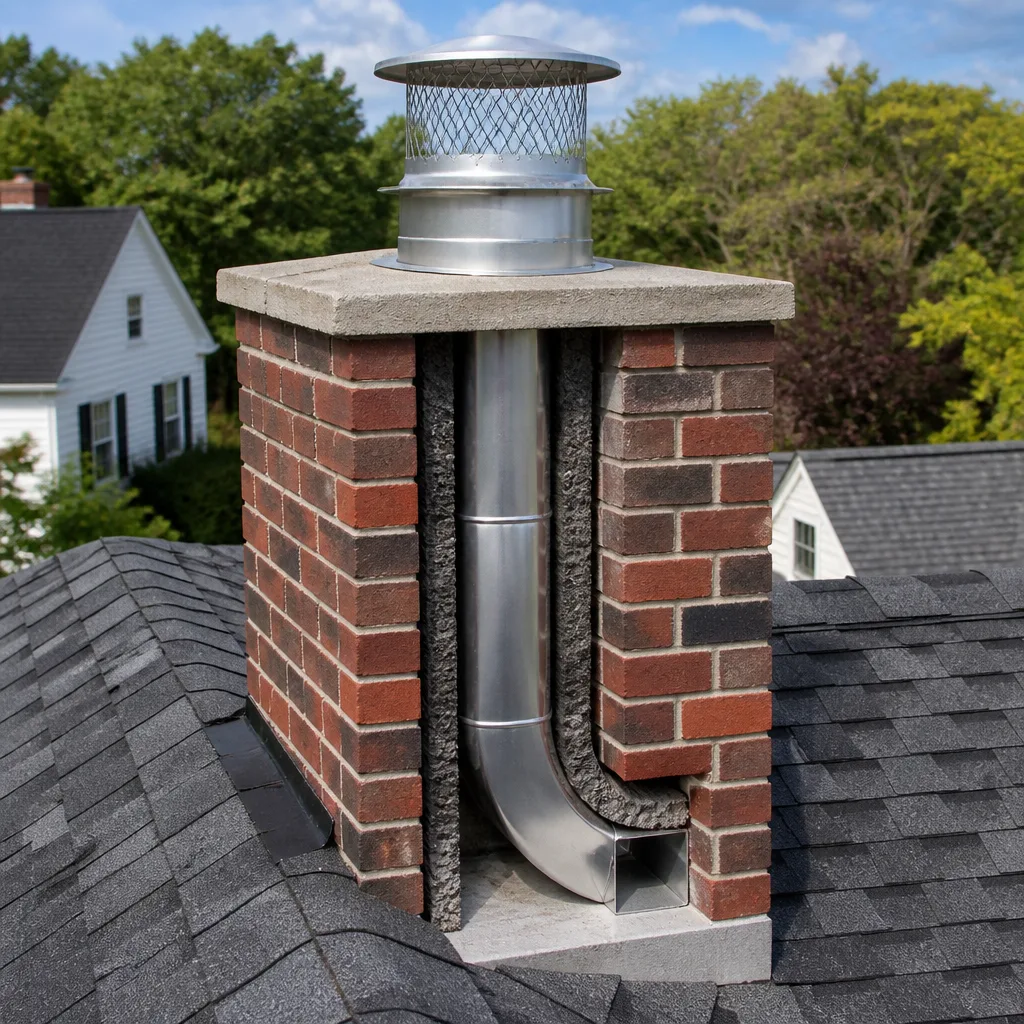
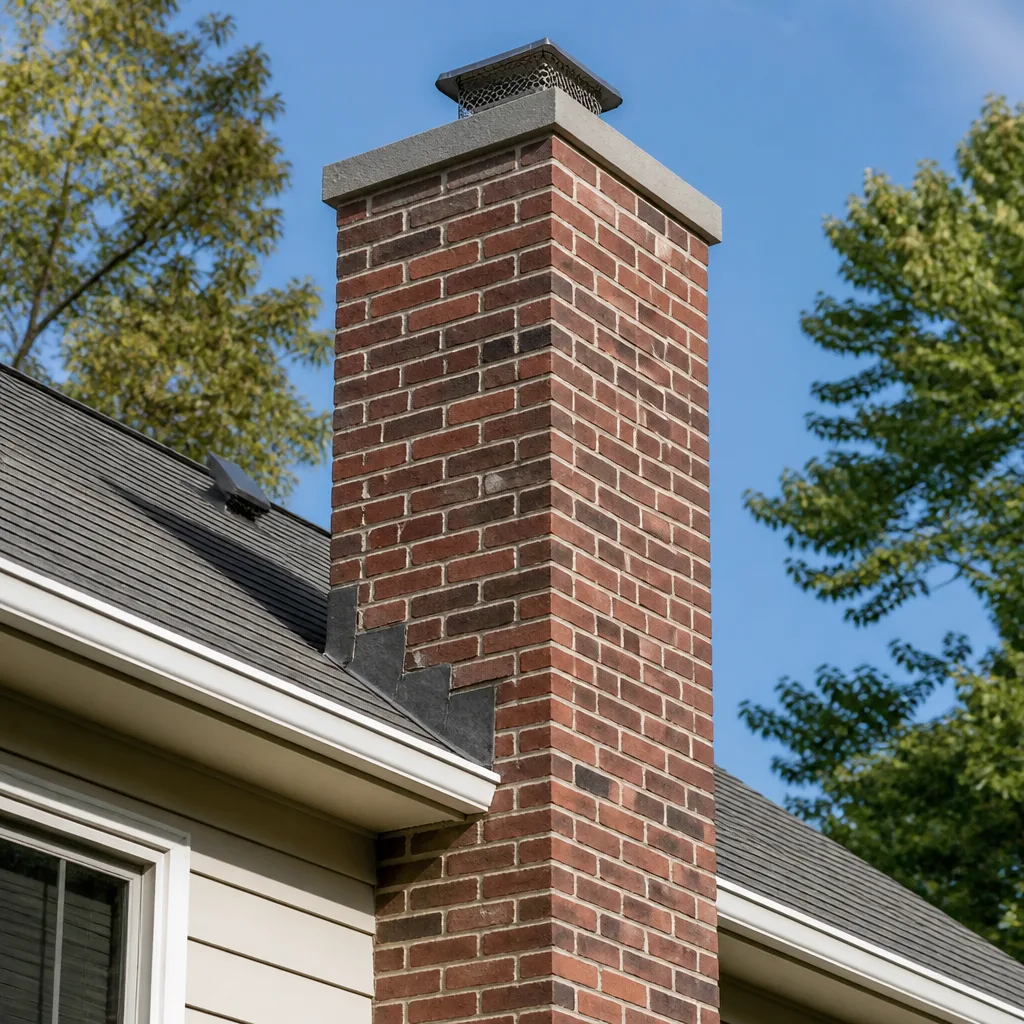
 Before
 After
After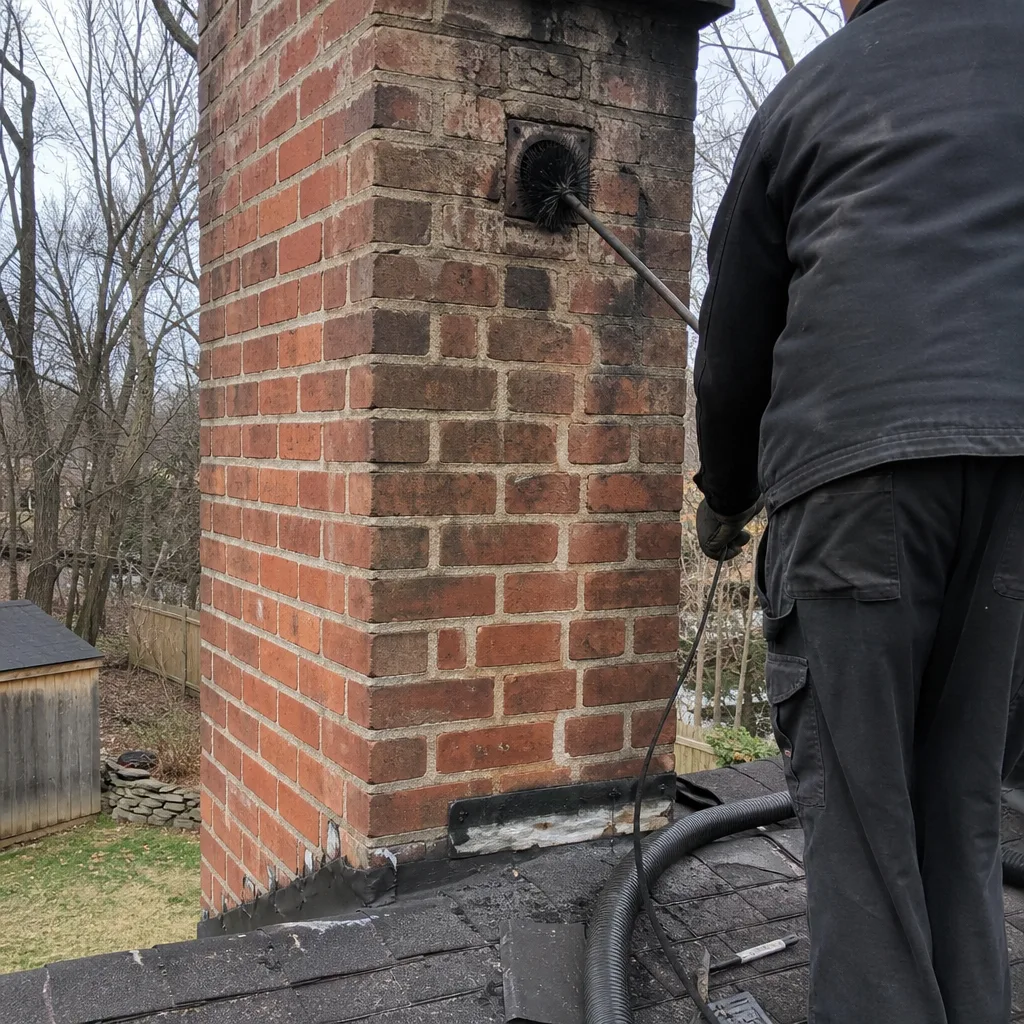 Before
 After
After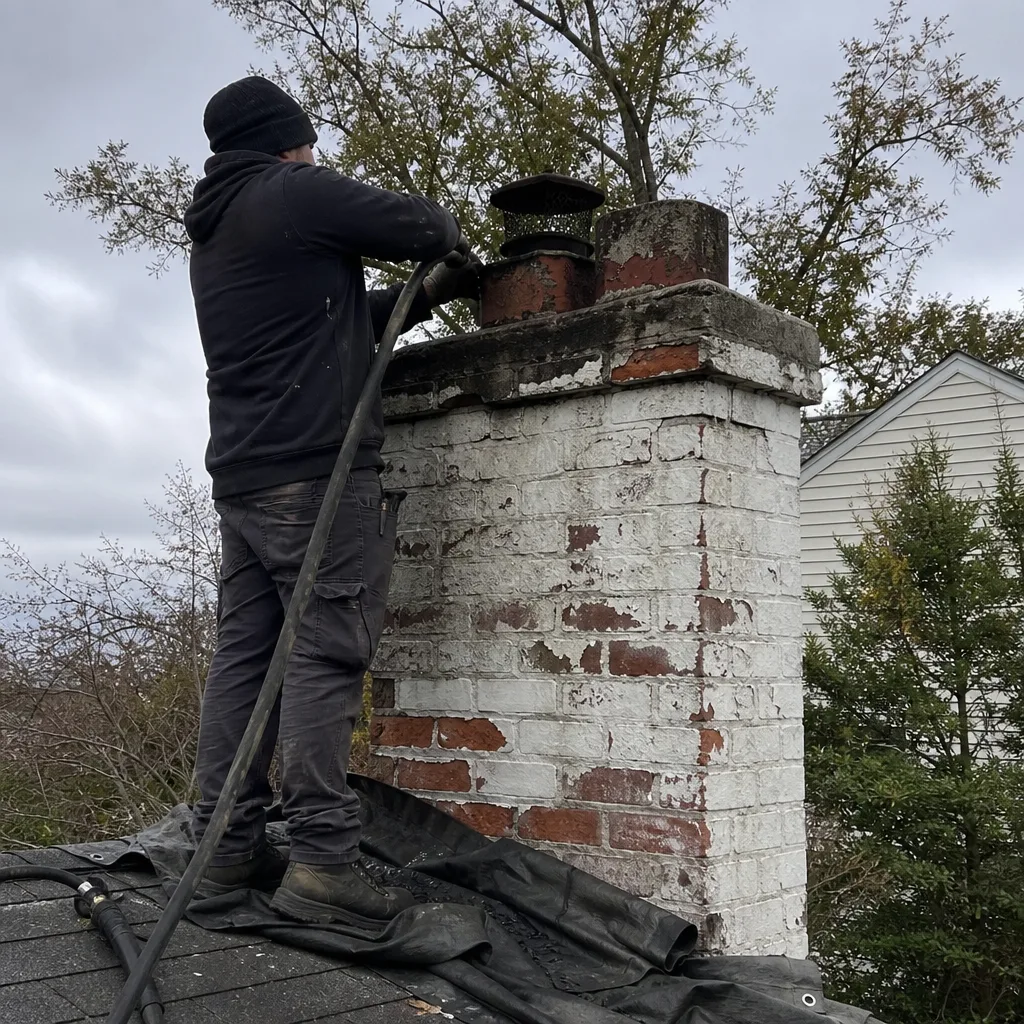 Before
 After
AfterSoot Removal in Alexandria, VA
Soot removal in Alexandria typically runs $149 to $349, depending on flue size, soot accumulation depth, and whether a camera inspection is needed to document conditions before and after. See our full How Much Does Chimney Cleaning & Sweep Cost? (2026 Price Guide) - Alexandria, VA for detailed pricing. Most jobs are completed in a single visit, with a written price delivered before anyone touches your chimney.
Soot is the fine black carbon residue that coats flue walls, smoke shelves, and fireplace interiors after every fire. It looks like dust, but it’s mildly acidic, absorbs moisture, and degrades mortar joints over time. Left alone long enough, it also becomes a base layer for creosote – a harder, more flammable deposit that moves chimney cleaning from routine maintenance into a fire-hazard conversation. At Level Two Chimney Alexandria, soot removal is part of our broader Chimney Cleaning & Sweep in Alexandria service, and every visit follows the same documented, camera-verified process we’ve used since 2009.
Questions before booking? Call us at (240) 290-6726 – a live person answers around the clock, not a voicemail.
When You Need Soot Removal
Not every fireplace owner knows what to look for before calling a Chimney Cleaning & Sweep services professional. These are the clearest signs that soot has built up enough to warrant professional removal:
- Black staining on the firebox walls or damper throat. A thin gray film is normal after one or two fires; heavy black coating that smears when touched means soot is accumulating faster than it’s dispersing up the flue.
- A persistent smoky smell inside the house. Alexandria’s older rowhouses and colonials in Del Ray, Seminary Hill, and Old Town frequently have tighter-than-average flues. Soot buildup reduces the flue’s effective diameter, causing smoke to backdraft into living spaces instead of drafting cleanly upward.
- You haven’t had the chimney swept in more than a year. NFPA 211 recommends an annual inspection and cleaning for any chimney in regular use. In Northern Virginia’s climate – cold, humid winters followed by wet springs – soot mixed with seasonal moisture becomes acidic faster than it would in a drier region.
- Dark dust showing up on the fireplace surround or hearth. Fine soot particles migrate through gaps around the damper and settle on surrounding surfaces. If you’re wiping down the mantel more often than usual, the flue interior is telling you something.
- You’re burning green or mixed wood. Wet or unseasoned wood produces significantly more soot per cord than properly dried hardwood. If your wood source changed this season, accumulation rates will have changed with it.
- You recently bought the home. Alexandria’s real estate market moves quickly, and pre-purchase inspections rarely include a camera look down the flue. We inspect roughly 400 newly purchased homes a year in the Alexandria area, and a meaningful share show soot and early-stage creosote that the previous owners simply never addressed.
Our Soot Removal Process
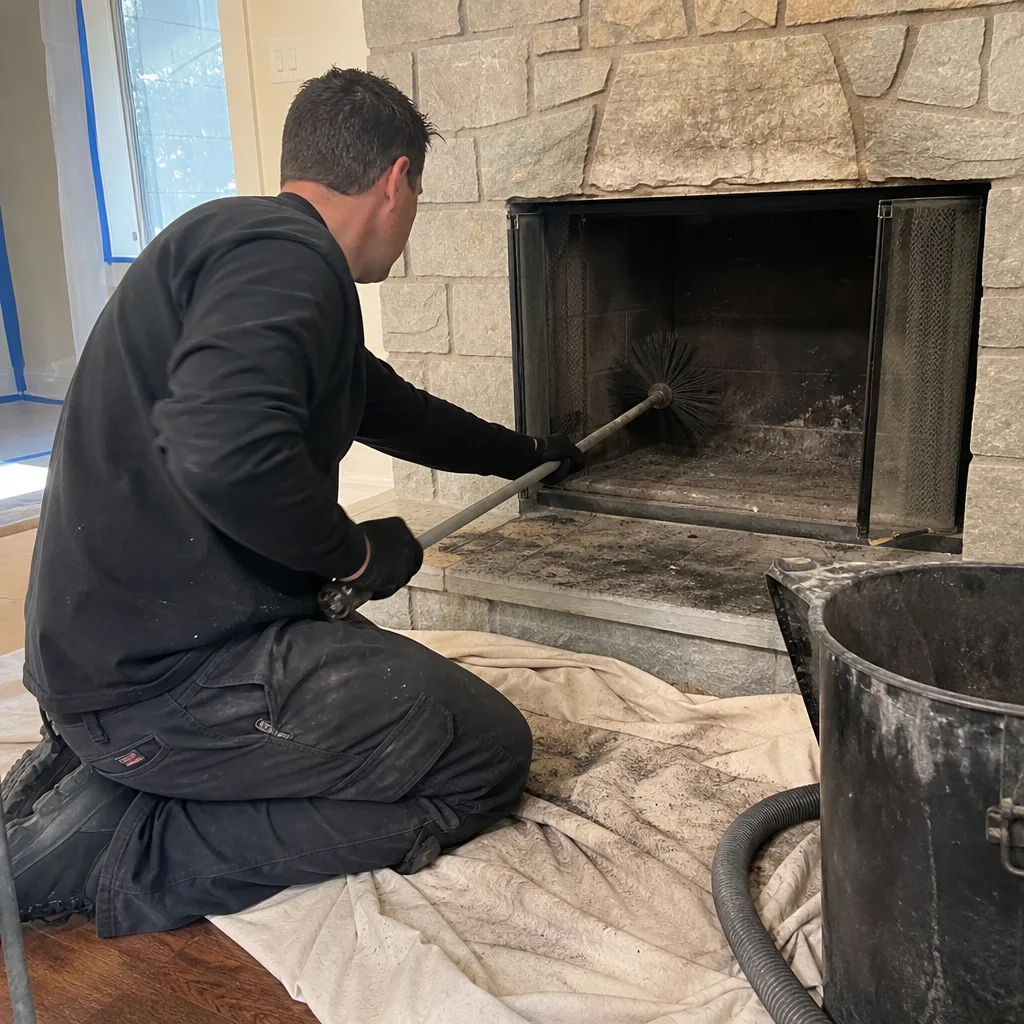
Every soot removal job at Level Two Chimney Alexandria follows a documented sequence. Nothing is improvised, and nothing is skipped to save time. Here’s exactly what happens:
- Written price before we start. Under Clause 1 of the Haven Standard – what we call “Have it in writing” – you receive a written price, written scope, and written warranty before the technician opens a single tool. There is no verbal estimate followed by a revised number once the job is underway.
- Pre-cleaning camera scan (NFPA 211 Level 2). We run a camera down the flue before any cleaning begins. This documents the existing soot depth, identifies any liner damage, and establishes a baseline for the photo record you’ll receive when the job is done. Most companies skip this step. We’ve made it standard practice since 2009, and it became Clause 4 of the Haven Standard for exactly that reason.
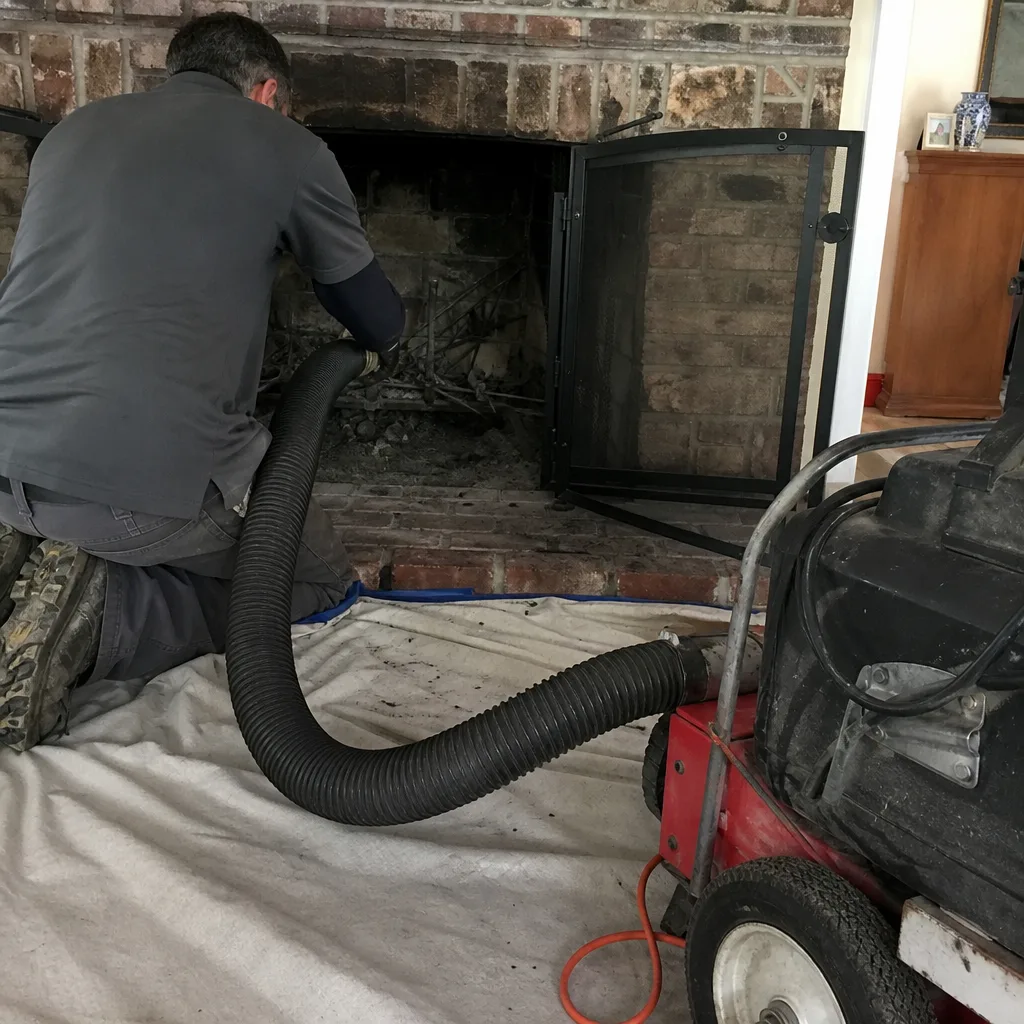
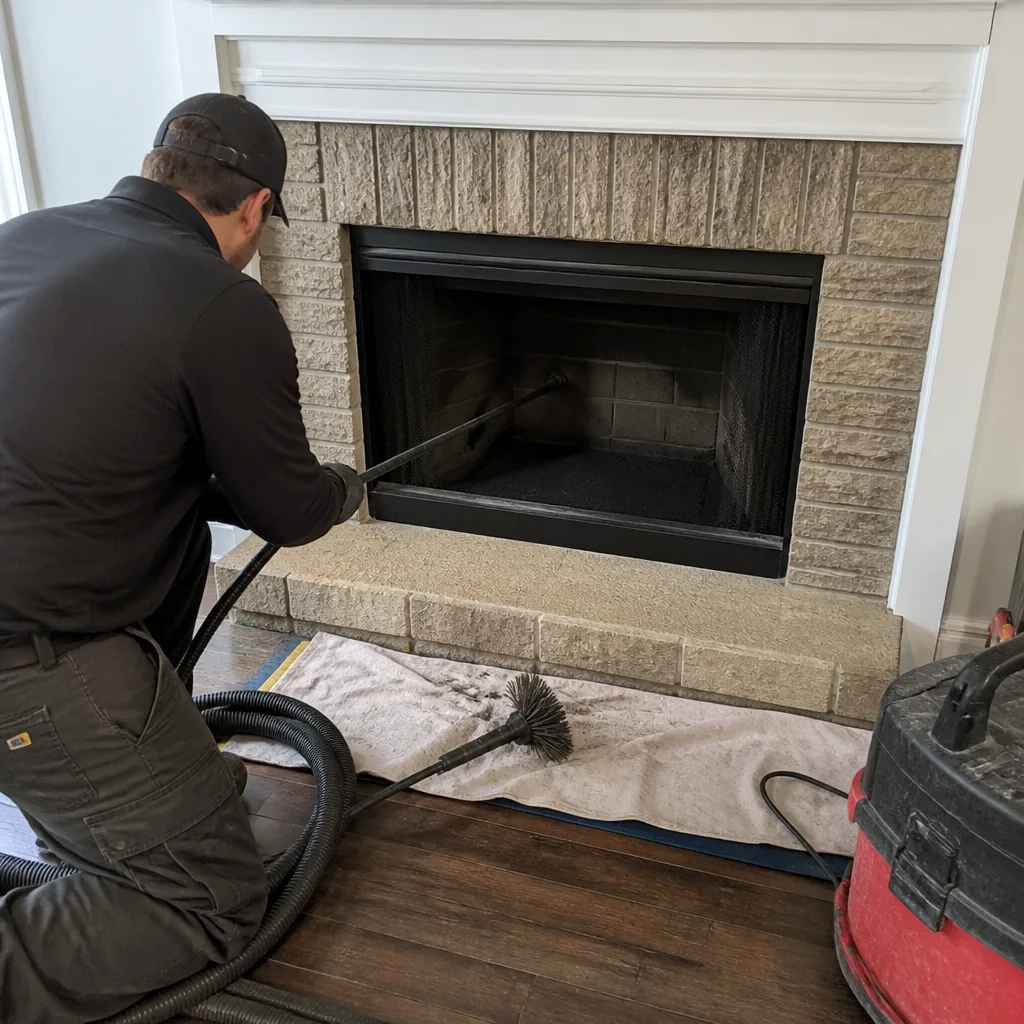
- Firebox and smoke chamber preparation. The technician seals the firebox opening with a drop cloth barrier and sets up a HEPA-filtered vacuum system before brush work begins. This matters in Alexandria’s older homes, where original fireplace openings are often oversized and soot displacement into the room is a real risk without proper containment.
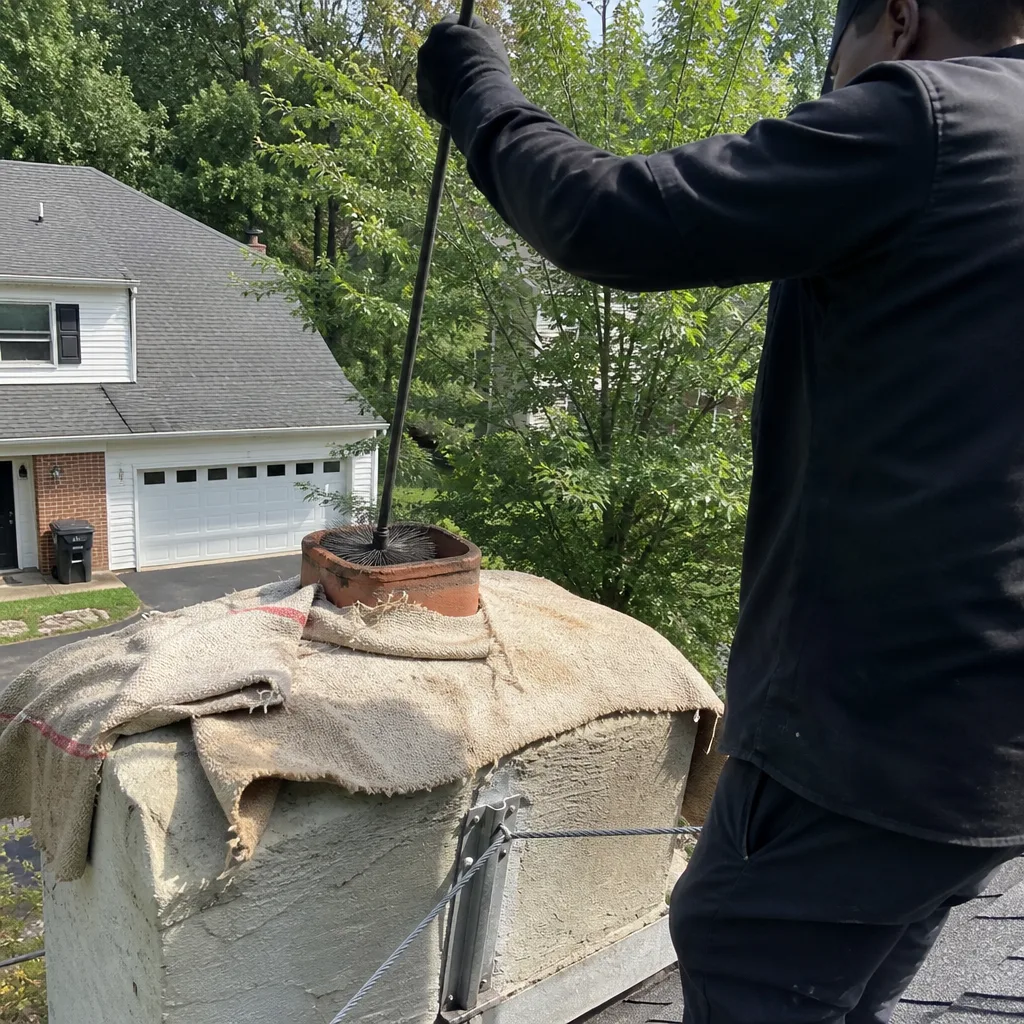
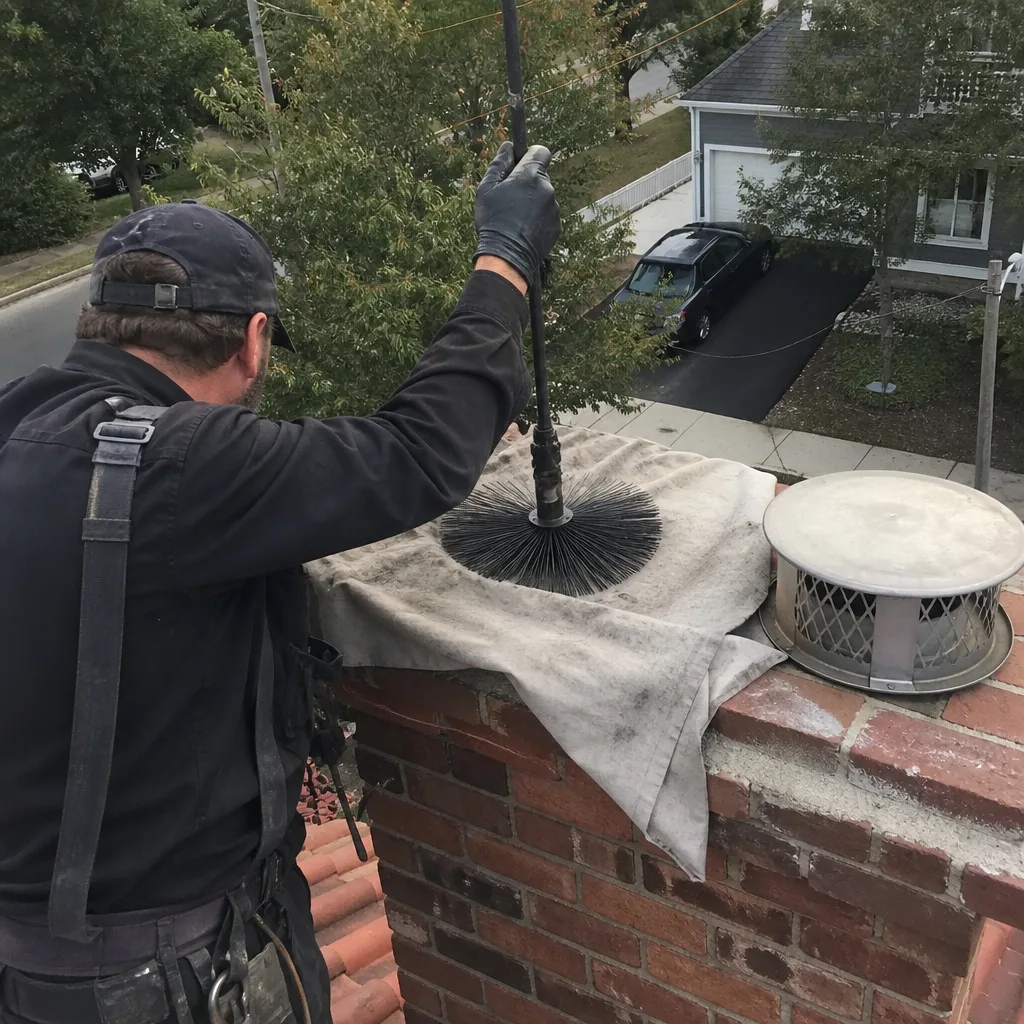
- Rotary brush cleaning of the flue liner. Working from the firebox upward (or from the top of the chimney downward, depending on flue geometry), the technician uses chimney brushes sized to your specific liner diameter to break soot loose from the flue walls. Dislodged material falls to the firebox where the vacuum captures it continuously.
- Smoke shelf and smoke chamber cleaning. The smoke shelf – the horizontal ledge just above the damper – collects soot heavily and is one of the most frequently skipped surfaces in a rushed sweep job. We clean it as part of the standard process, not as an add-on.
- Post-cleaning camera scan and documented photo record. Once cleaning is complete, the camera goes back down. The technician compares the before and after footage, notes any findings (mortar erosion, liner cracks, water staining), and compiles the photo record you receive on completion. If anything needs attention beyond soot removal, you’ll see it documented in writing – not described verbally at the door.
BeforeAfterSoot Removal Pricing in Alexandria
Soot removal in Alexandria costs $149 to $349 for most residential chimneys. The range exists because several real variables affect the scope of work:
- Flue size and height. A standard 8×8-inch clay-tile liner in a single-story Alexandria townhouse cleans faster than a 13×13 liner running three stories in one of the larger homes near Waynewood or Hollin Hills.
- Depth of accumulation. Light soot from one season of moderate use is straightforward. Heavy, compacted soot from two or three years of use – common in properties that sat between owners – adds time and material.
- Number of fireplaces on the system. Some Alexandria homes, particularly in Rosemont and Beverly Hills, have multi-opening systems or back-to-back fireplaces sharing a single flue. Each additional opening is priced separately.
- Creosote present alongside soot. If the camera scan finds Class II or Class III creosote beneath or mixed with the soot layer, the cleaning method and pricing change. Class III creosote – glazed and tar-like – requires chemical treatment before mechanical removal and is priced separately starting at $299 for that component alone.
| Service | Typical Price Range |
|---|---|
| Standard soot removal (single flue) | $149 – $249 |
| Soot removal with smoke shelf cleaning | $199 – $299 |
| Soot removal + camera inspection (NFPA 211 Level 2) | $249 – $349 |
| Class III creosote treatment (add-on) | $299+ |
| Multi-flue or multi-opening systems | Priced per flue |
We don’t do “call for a quote.” The price is on the page in ranges, and a written price is on your doorstep before any work begins. If you’ve received a written estimate from another company, we’ll provide a free second opinion on it – no charge, no pressure to switch.
Call (240) 290-6726 to get an exact figure for your Alexandria home.
What Soot Does to Your Chimney Over Time
Soot is often described as a cosmetic problem. It isn’t. The carbon particles are mildly acidic on their own, but the real issue is what happens when soot absorbs moisture. Northern Virginia winters run wet – Alexandria typically sees 40 or more inches of precipitation annually, with a freeze-thaw cycle that starts in November and doesn’t fully clear until March. Soot-saturated mortar joints absorb that moisture, freeze, expand, and crack. We see spalling brick and eroded mortar joints in Alexandria chimneys every spring, and a significant share of those repairs trace back to seasons of soot that was never removed.
Beyond structural wear, soot is the first stage of creosote development. First-degree soot is dusty and brushes away easily. If it’s not removed and wood continues to burn, it compresses, picks up tar compounds from incomplete combustion, and graduates to second-degree glazed creosote, then third-degree – the stage that chimney fires feed on. That progression doesn’t happen overnight, but it moves faster in a chimney that’s never been documented. Because we run a camera scan on every visit, we catch the transition early, when the fix is a cleaning rather than a liner replacement.
Alexandria-Specific Conditions That Affect Soot Accumulation
Alexandria’s housing stock shapes how quickly soot accumulates and where it concentrates. Old Town’s Federal and Greek Revival homes – many built between 1790 and 1850 – have original masonry flues that were sized for wood fires, not for the gas-insert conversions that went in during the 1980s and 1990s. When those inserts are removed (which happens regularly when buyers want to restore a wood-burning fireplace), the flue often holds decades of compressed soot and residue from both fuel types.
In the West End and Lincolnia areas, postwar brick colonials typically have 8×8 or 8×13 flue liners in solid condition but with poor top-cap designs that allow rain to run directly into the flue. That moisture mixes with soot and accelerates the acid damage to mortar joints. We see this pattern consistently in homes built between 1952 and 1975 in those ZIP codes.
Del Ray’s craftsman bungalows present a different issue: many have had their dampers removed or corroded to the point of non-function. Without a working damper, humidity cycles freely through the flue, and soot absorbs ambient moisture year-round instead of only during firing. It makes the soot denser and stickier by the time a sweep gets to it.
These aren’t hypothetical scenarios. They’re what the camera finds on a regular basis, documented in the photo record that goes home with every customer under Clause 4 of the Haven Standard.
Why the Camera Inspection Matters for Soot Removal Specifically
A brush run through a flue removes soot. What a brush run can’t tell you is what’s underneath it. Soot deposits can mask liner cracks, open mortar joints, and spalling tile sections. Without a camera, the technician calls the job clean and leaves. With a camera, those underlying conditions are visible, documented, and – if they require repair – quoted in writing before anyone assumes you’ve agreed to anything.
Level Two Chimney Alexandria introduced camera-scan documentation as a default practice in 2009, years before Virginia insurance carriers began requesting photo documentation as a condition of homeowner coverage on older masonry systems. Clause 4 of the Haven Standard now requires a documented photo record on every job. It’s not an optional upgrade.
The NFPA 211 Level 2 standard specifies camera inspection for any chimney that has experienced changes in use, fuel type, or system components – and technically, any new ownership qualifies as a change in use. If you bought your Alexandria home within the last five years and the chimney hasn’t been camera-inspected, the soot removal visit is the right time to establish that baseline.
Soot vs. Creosote: Knowing Which You’re Dealing With
The two get conflated, but they’re different materials at different stages of the same process. Soot is fine, powdery, and gray-to-black. It wipes off surfaces with light pressure and smells faintly of woodsmoke. Creosote comes in three grades: first-degree (still powdery, easy to brush), second-degree (flaky or tar-like, harder to remove), and third-degree (hard, glazed, shiny, and the actual fuel source in a chimney fire).
What makes this practically important is that the removal method – and the price – differs significantly between them. Standard brush cleaning handles soot and first-degree creosote. Second-degree requires heavier mechanical work. Third-degree requires a chemical treatment applied before brushing, because a brush alone can’t break through the glaze. Copperfield makes a rotary cleaning system we use for second-degree cases; for third-degree, we use a chemical agent, allow a dwell period, then follow with mechanical removal.
The camera scan tells us which category we’re in before we quote the job. That’s not a secondary benefit; it’s the reason the scan happens first.
FAQs – Soot Removal in Alexandria
How much does soot removal cost in Alexandria?
Soot removal in Alexandria costs $149 to $349 for most single-flue residential chimneys, with the exact price depending on flue size, accumulation depth, and whether a camera inspection is included. The written price is confirmed before any work begins. Call (240) 290-6726 for an exact figure – estimates are free.
Is soot removal the same as a chimney sweep?
Soot removal is one component of a full chimney sweep. A complete Chimney Cleaning & Sweep in Alexandria also includes inspection of the firebox, damper, smoke chamber, crown, and exterior masonry. If the only issue is light soot from a recent season, a targeted removal visit may be sufficient. The camera scan at the start of the visit determines what’s actually needed and we price accordingly – never for more than the job requires.
Can soot damage my chimney permanently?
Soot alone won’t cause irreversible damage if it’s removed on a regular Annual Sweep schedule. The problem develops when soot is left to absorb moisture over multiple seasons. In Alexandria’s climate, that moisture-soot combination accelerates mortar erosion and can cause tile liner sections to crack. Sustained neglect over four or five seasons can lead to liner damage that requires relining rather than cleaning – a significantly higher cost. Catching it at the soot stage is the less expensive outcome by a wide margin.
How long does soot removal take?
A standard single-flue soot removal job in an Alexandria home takes 60 to 90 minutes from setup to final camera scan. Multi-flue systems or heavier accumulation add time. We send a text when the technician is on the way, and the written price you’ve already received accounts for the full scope of the visit – no add-ons at the end of the job.
The 365-Day Done Right Promise
Every soot removal job at Level Two Chimney Alexandria carries the 365-Day Done Right Promise. If the work isn’t done right, we come back and make it right. That promise is in writing, stamped on every job under the Haven Standard, and it means exactly what it says. Not “at our discretion” and not “subject to terms.” Done right or we return.
Corrine Halstead built the Alexandria operation on the principle that documentation is the only honest substitute for trust you haven’t yet earned. After more than 38,000 chimney inspections and cleanings completed since 2009 – every one with a written price before work started and a photo record when it was done – the documentation speaks for itself. We source materials through Haven’s buying network from suppliers including Olympia Chimney and Famco specifically to keep procurement costs controlled and pass that through to customer pricing.
Schedule Soot Removal in Alexandria
If your Alexandria fireplace is overdue for cleaning, showing signs of soot buildup, or you’re buying a home and want the flue documented before the first fire, search Chimney Cleaning & Sweep Near Me in Alexandria, VA or call (240) 290-6726. A live person will answer, confirm availability, and give you a price range for your specific chimney before a technician is ever dispatched. We serve Alexandria’s neighborhoods – Old Town, Del Ray, Rosemont, Lynhaven, Seminary Hill, Waynewood, and the rest of the city – and the written estimate is free.
For the full scope of what’s included in a professional cleaning visit, see our home page or go directly to the Chimney Cleaning & Sweep in Alexandria page for service details and pricing across the complete sweep process.
Written by Corrine Halstead, Owner at Level Two Chimney Alexandria, serving Alexandria.